Unusually controversial, boat rocking yet lacking book
Jean Raspail's The Camp of the Saints is crude, racist and weak as literature, yet its 1973 picture of mass migration to Europe now reads as uncomfortably prescient.
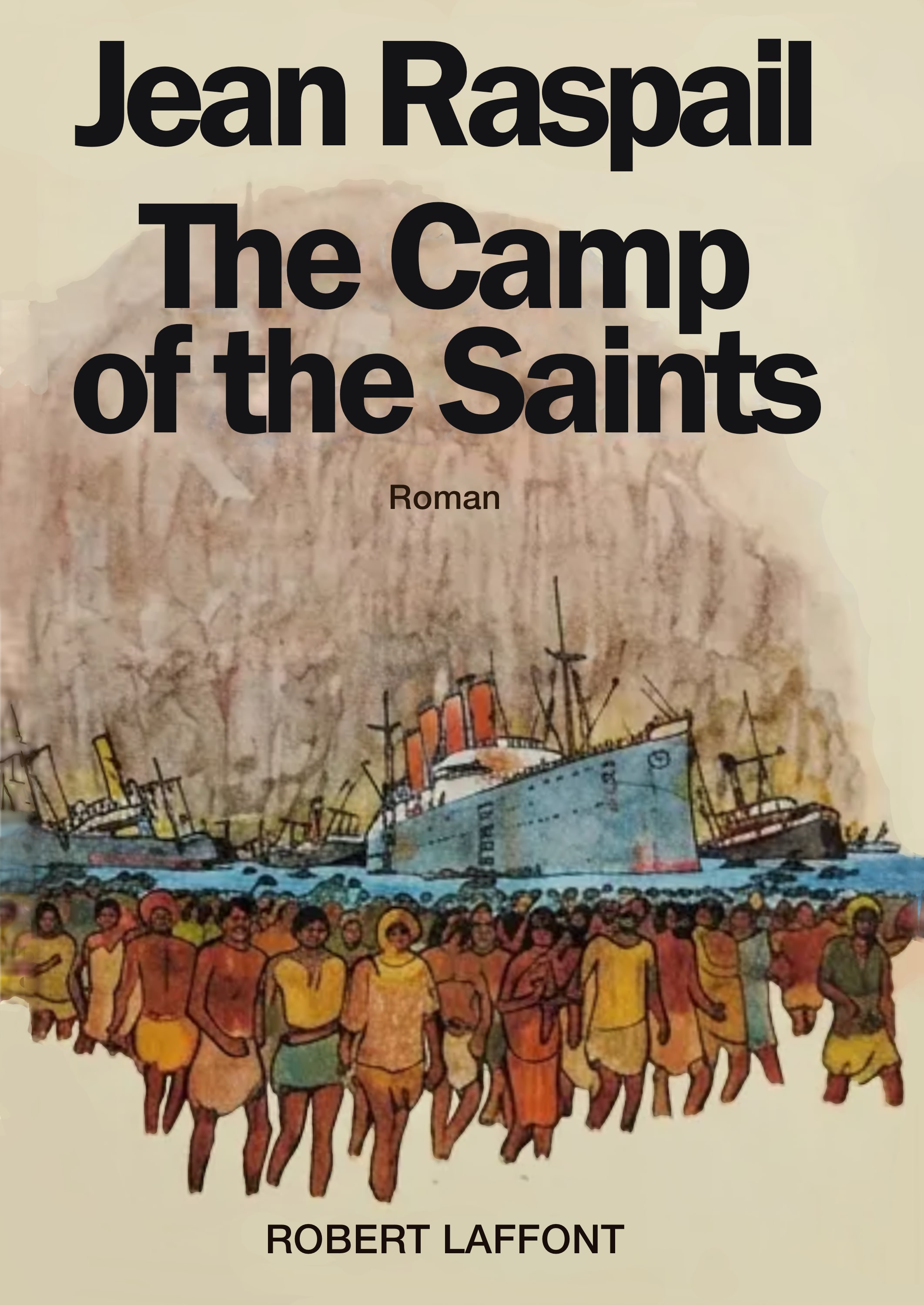
Jean Raspail — The Camp of the Saints (Le Camp des Saints) is a 1973 novel written by Jean Raspail. He was French, had a lifelong passion for global travel from an early age, and wrote stories about various oppressed indigenous peoples, such as Native Americans. He was quite conservative, even religious, but also a former Boy Scout leader and in many ways a minimalist. And then he wrote this highly controversial novel, The Camp of the Saints (the title is a biblical reference to the Book of Revelation in the New Testament, where the faithful face the forces of evil in a final apocalyptic battle).
The plot is fairly straightforward: the story takes place in a vague future—essentially "our present," or rather the late 20th century, which was the future to him at the time. It’s amusing that the Soviet Union is still around and apartheid still exists in South Africa. The premise is that crushing poverty in India drives a million desperate people to assemble a massive makeshift armada and sail toward France as refugees. The entire world watches intently, waiting to see what happens. Inside France itself, the prospect naturally sparks an intense reaction—and for the majority, it is one of elation. They believe it is only right, that the decadent, colonial West is guilty of everything, and that France deserves to be overrun by these migrants (referred to in the book as the "Ganges," as in people from the Ganges River). A small fraction of the French population opposes this, but they are an absolute minority. The armada arrives, meeting virtually zero resistance. Inspired by this, similar waves head toward other developed nations: the US, Australia, Britain.
Without question, the book describes these migrants in a deeply snobbish, repulsive manner—depicting them as foul-smelling, dirty, monstrous, and hostile. One could argue about harsh realities, but by any standard, the language used is blatantly racist. Paradoxically, much of what was depicted back then—which likely seemed unimaginable at the time, dismissed as groundless scaremongering—has played out in the modern day. The massive waves of migrants flowing into Europe from third-world nations, the response of a predominantly left-leaning media, and the general public's failure to grasp what is actually unfolding. In a way, it feels remarkably prescient and more relevant than ever; as toxic and taboo as the book seemed back then, the reality today is unfolding on a vastly larger scale.
That being said, purely as literature, the novel is extremely weak. The characters are wooden and theatrical, and everything is exaggerated and oversimplified to the extreme. From the perspective of critics of these fears, the portrayal is caricatured and offensively chauvinistic; from the perspective of its supporters, it feels strangely limp and didactic. Looking back from today’s vantage point, knowing this is no longer mere speculation but reality, you can see how such an outcome is plausible without stretching the imagination. I wanted to look into this myself, especially given how aggressively the book was banned and deplatformed at various points. The direction of the narrative is also quite unusual.
Modern pop culture constantly forecasts a bleak future, but those dystopias tend to be one-dimensional. In The Camp of the Saints, the future is equally grim, but in a way fundamentally different from typical apocalyptic tropes, which makes it fascinating in its own right. It is just unfortunate that the premise wasn't handled better—it would have been compelling to see a setup like this executed with genuine literary craftsmanship.
- amzn.to/4zdXL07 Audible
- amzn.to/4dnlRgt Kindle