Aggregation Theory
A short introduction to Ben Thompson's Aggregation Theory and why it matters for understanding platforms, scale, and digital business.
In the information technology industry—one of the most important and rapidly developing sectors of the last half-century—no one explains business processes better than Ben Thompson. He created a project called Stratechery, where he regularly shares his thoughts, records podcasts, and gives presentations. As part of this project, he developed and popularized Aggregation Theory, which has already gained widespread recognition. Despite this, mentions of the theory are infrequent in the Russian-speaking sphere, and likely among my readers as well. Nevertheless, this theory should be foundational knowledge for anyone interested in IT and business.
Aggregation Theory: In Simple Terms
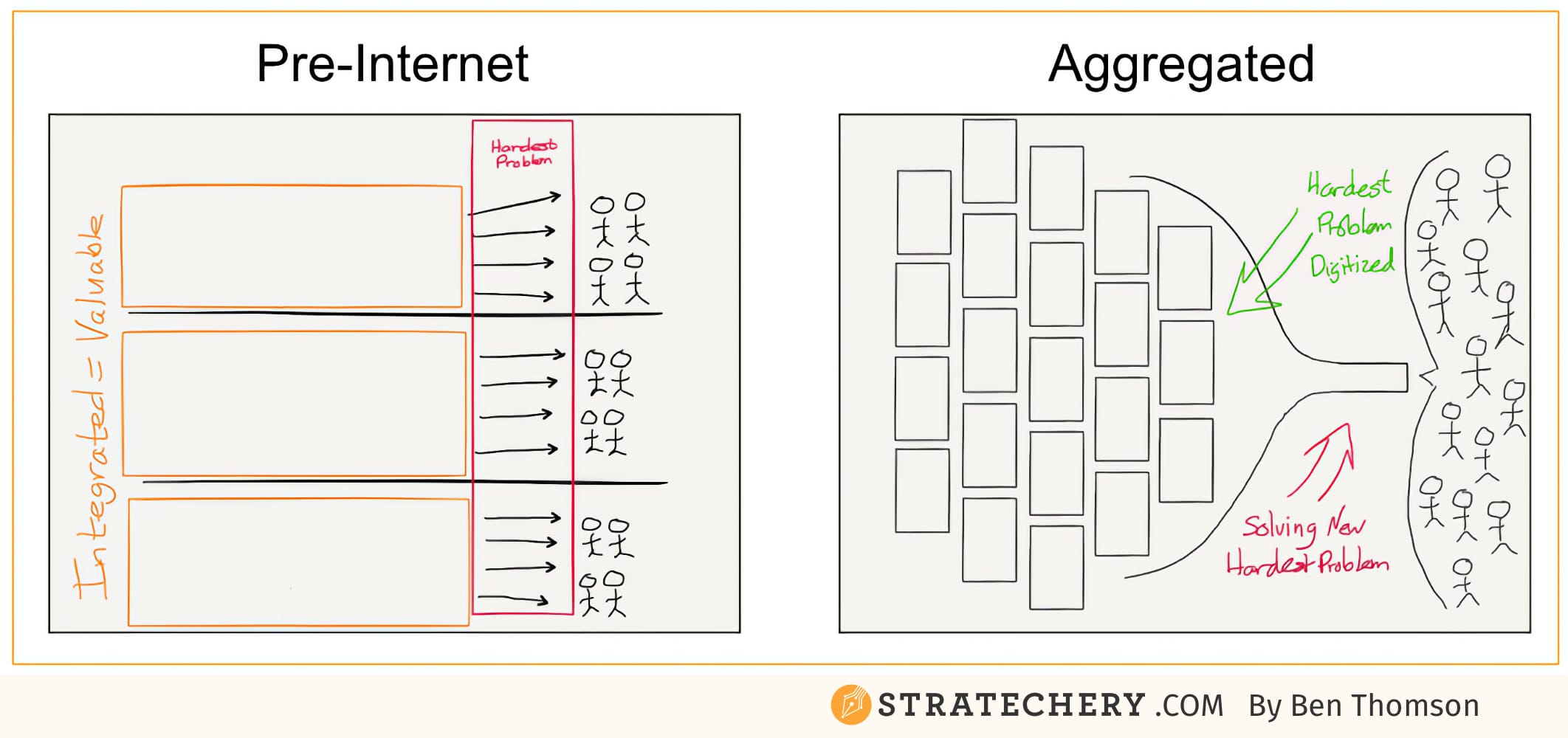
Aggregation Theory explains how, in an era of digital abundance and surplus, the key players become the platforms that can aggregate user and consumer interests, and accordingly, the offerings meant for them. This is achieved through convenient search, a wide assortment, and efficient organization. The brightest examples of such platforms are Google, Amazon, Netflix, as well as Yandex in Russia and neighboring countries. Their success is based on scale and so-called zero marginal costs.
What Makes These Platforms Special?
Initially, the foundation of it all is:
- Content Aggregation: A massive amount of content or products is aggregated, making the selection broad and convenient for the user.
This leads to:
- Attracting Consumers: These platforms offer incredible convenience and personalization, drawing in users.
Which allows for:
- Data Utilization: Interactions with consumers generate data, which the platforms use to further improve their offerings and the user experience.
Why is this Important?
These platforms demonstrate unprecedented scaling rates thanks to the internet and zero marginal costs, which means the cost of serving each additional user is practically zero. They disrupt traditional industries by eliminating middlemen and directly connecting suppliers with consumers.
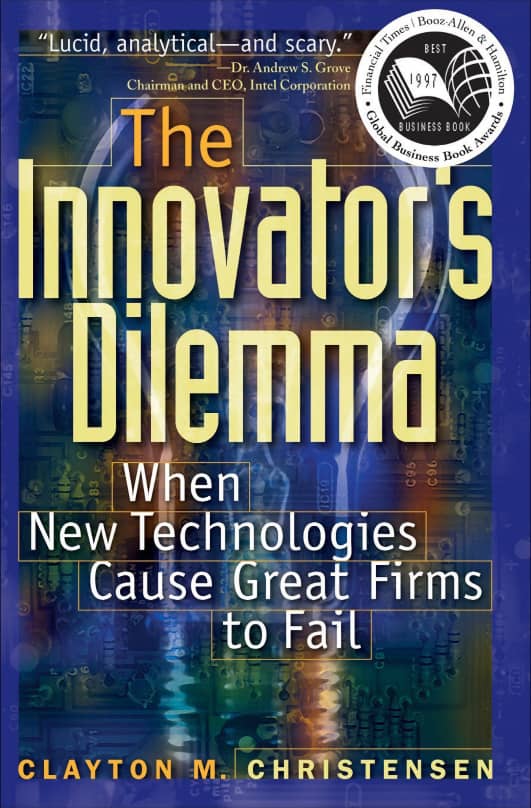
By the way, Ben arrived at his Aggregation Theory by building off the Theory of Disruption described by Clayton Christensen in The Innovator's Dilemma book.
Larry Page, one of the co-founders of Google, once brushed off accusations of Google abusing its monopoly by saying: "Competition is one click away." This emphasizes that people use these platforms not because they have no choice, but because they like them.
Ben Thompson's Aggregation Theory gives us the key to understanding the dynamics of the digital economy and highlights the importance of user-centric strategies for success in the modern digital world. In short, go read up on it some more—a lot of things will become noticeably clearer. But don't limit your knowledge about it with just this blog entry, go read it at the source: stratechery.com/aggregation-theory.
Tags: technologybusinessstrategyeconomics