Condign
Economic self-sufficiency, fragile global supply chains, specialization, and the difficult need to protect essentials without abandoning cooperation.

I find myself thinking more and more about economic self-sufficiency on the scale of countries or conglomerates.
For a long time, the world stubbornly moved toward an increasingly pervasive globalization. But eventually, the side effects it brought created, first of all, a demand among large segments of the population for some kind of pushback. This, in turn, added fuel to the fire of populism (not just this, of course, but it was clearly a factor). Moreover, it led to an excessive concentration of key manufacturing, technology, and even resources in the hands of a very small number of players, making everyone else vulnerable.
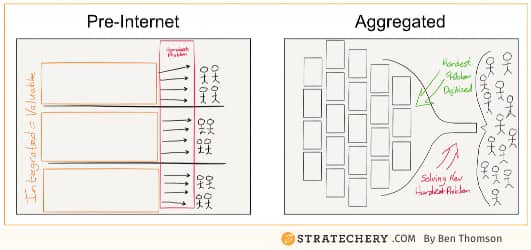
It is worth unpacking what vulnerability means in this context. A single person cannot do everything themselves; specialization is necessary. And the broader and deeper this specialization, the greater the difference in the quality and quantity of what is produced between the specialist and everyone else, and, at the same time, the greater the dependence on them. When there is dependence, any emergency will result in at least a disruption. This is true at the level of a village in the ancient world, and it is just as true at the level of the modern global economy. Overconcentration is usually called a monopoly, but that is not always the case. "Monopoly," as it turns out, is too narrow a term, because there are also oligopolies, cartels, guilds, and, as a new techno-economic phenomenon, aggregators.
Modern technologies are so complex that developing and scaling a critical, sophisticated product or production process often requires years and the best minds from all over the world. And even that is barely enough. Simply put, though the world is massive, we want so many complex things that we are running out of people. There is a genuine shortage of specialists. On top of that, birth rates are falling, which hits this specific demographic hardest. This is further exacerbated by the fact that more and more people are employed in non-productive jobs. As a result, a technological leader emerges, or maybe two or three. It is unrealistic for others to catch up. This is not because the leader is some kind of evil monopolist — competitors simply do not have competent specialists. Training new ones takes years, while the leader will not stand still. In any semi-free market, they will vacuum up every newly trained semi-expert, simply because they can train them further and employ them more effectively.
This is one side of the coin: let's call it chain complexity. The second is fragility. If an accident, a war, a natural disaster, or anything else happens and something breaks on the leader's end, it leaves the entire world hanging. The complexity of these chains means they are incredibly hard to rebuild, repair, or hand over to someone else, even if everyone wants to and all the necessary funds are there.
Then there are the not-so-friendly players. We can debate politics all we want, but we are undeniably in a situation where some countries are now in a position to blackmail others. Authoritarian regimes generally pull this off a bit better: while any blackmail hurts one's own people too, authoritarian states find it exponentially easier to sacrifice the welfare and interests of their citizens and businesses. Unfortunately, the modern world has poorly learned the lesson of the paradox of tolerance.
So, what is the bottom line?
We can try to do more ourselves. This in itself is already highly complex, slow, and expensive. First of all, who exactly is "us"? Dividing the world into the Collective West and the Global South feels like the bare minimum, yet even here, achieving noticeable progress is incredibly difficult. But even if this succeeds completely, there is no unity within either camp. Isolationists are ready to abandon formerly partner countries, and not without reason, as many of those partners do not act partner-like, or fail to behave rationally and responsibly. And we must remember that attempts to redistribute specialization usually lead to a slowdown, though not always. Sometimes, on the contrary, they create competition, which is highly stimulating.
And this brings me (smoothly) to a key point. I still believe that you cannot do everything yourself. It is inefficient, unprofitable, and, at this stage, outright unrealistic. But it is vital to handle the essentials. A simple thought, perhaps, but a crucial one. And whatever you do not make yourself, you need to stockpile. This is easier said than done. During the Cold War, the "second world" (the West being the first, various developing countries the third, and the USSR and its allies the second) tried to be self-sufficient. It was tough. In their case, it was difficult primarily due to an inefficient economic model. During World War II, Germany and its allies were also self-sufficient, and we know how hard that made things for them. More importantly, all of that was a very long time ago. Technology has advanced so much that the self-sufficiency of that era is simply impossible today.
Therefore, alongside attempts to build self-sufficiency, we must establish a proper dialogue that clearly demonstrates to the other side where deglobalization leads. The Collective West is doing a very poor job at this. Yet achieving this is even more critical than full self-sufficiency. Years of comfortable living have led to a complete collapse of political responsibility in the vast majority of developed nations, alongside a decline in the personal responsibility and awareness of ordinary citizens. It is going to be tough.
Tags: economicsglobalizationtechnology