Data-Centers Struggles
On protests against AI data centers, the deeper fears behind them, and why data-center infrastructure may become strategically critical on Earth, underground, and in space.
In our TechLife Podcast (we are working on making it available in English, soon, but not there yet), Vasily and I discussed how the recent wave of public protests against new AI data centers is largely driven by a mix of surface-level environmental anxieties and much deeper economic fears. While critics heavily target the massive water and electricity consumption of these facilities, this outrage is often entirely disproportionate when you compare it to everyday resource drains like growing almonds or filling residential swimming pools. Ultimately, these environmental arguments usually mask a profound fear of the future. People are terrified of losing their livelihoods to automation, echoing the job losses seen during past globalization waves, and they feel powerless against a future potentially controlled by a small tech oligarchy. There is also a very real possibility that these local panics are being deliberately amplified by foreign geopolitical rivals through algorithmic platforms like TikTok to intentionally slow down Western technological dominance.
To overcome this public resistance, tech companies face a few choices, for example they could simply pay local residents a direct stipend to win their approval, or explore extreme alternatives like building data centers in space or in completely different countries. However, the physical location of a data center actually depends entirely on its specific technical purpose. Facilities built for training models require massive, densely packed GPU clusters and enormous power, but they can realistically be built anywhere in the world like Greenland, Australia or somewhere it's not hard from the regulatory point of view, because they don't need to communicate with end users. Conversely, inference centers must be built very close to the people using the models to eliminate latency, operating very much like content delivery networks for streaming video. The biggest challenge ahead will be the third category: facilities dedicated to AI agents communicating autonomously with other AI agents, which will inevitably become the most massive and resource-hungry data centers of all, those can be build anywhere, where it can just reliably powered and accessed electronically.
This is mostly about the US of course, but it will basically affect everyone. The situation is global.
AI development is moving incredibly fast, noticeably faster than other similar technological milestones. And while at first the growth bottlenecks were the technological approaches, research, and model development, it later temporarily hit a wall needing much larger financial investments. That issue was resolved almost instantly against the backdrop of the hype and off-the-charts demand. Now it has all hit growth limits tied to scaling in the physical world.
The situation here is immediately obvious. There's a shortage of various types of electronics themselves, like chips and memory, as well as the physical spaces to install them all, and then the resources they consume. In this massive spectrum of lagging supply chains, data centers are just one of many deficits, but they sit right in the middle.
Here's an interesting aspect. If we assume this is a bubble and this bubble bursts (which isn't a given, but let's assume), bubbles actually have a certain utility. They drive massive investments into infrastructure that will continue to be used long after the bubble pops. In this case, it's things like electricity generation, which is a fundamentally crucial thing. If it weren't for the exaggerated fear of nuclear power plants that started about 40 to 50 years ago, and if nuclear energy had developed as rapidly as other tech sectors, it's hard to even imagine what kind of world we'd have right now. For example, with much cheaper and more accessible electricity, we'd need far less coal and oil. We could desalinate salt water to irrigate massive territories, while transportation, manufacturing, construction, and of course computing would become significantly cheaper. It turns out this fear set humanity's development back by many decades, but now, thanks to the insane demand for energy for data centers, this issue will be resolved across several fronts at once. And even if the bubble bursts, the massive benefits will remain.
However, increasing power generation is just one of many pluses. Creating the models themselves is obviously another huge benefit, and the same logic applies here. Even if everything crashes, even the current models are so heavily underutilized in the global economy that reaping the rewards of implementing them in various ways will last us for decades.
So we can see that having development across all these necessary areas is extremely important for the economy. It brings incredible technological, economic, and consequently military advantages. It's unclear whether the new models will reach a level where old cybersecurity methods are simply powerless against them, though we are getting pretty close to that. If they do, it will simply be the end of the nuclear threat from countries without such capable models. But even without that, we are already seeing how the use of these models brings a significant edge right on the battlefield. Through autonomous drones, electronic warfare, reconnaissance and targeting, or simply by boosting the productivity of the defense industry.
As the capability gap widens, countries that will start losing their traditional forms of deterrence (actually, even those two countries that aren't losing them yet) will be thinking very hard about how to destroy these capabilities in others. You can bomb chip manufacturing plants, but that's a strike against the future. Bombing data centers — that is a strike against realized capabilities.
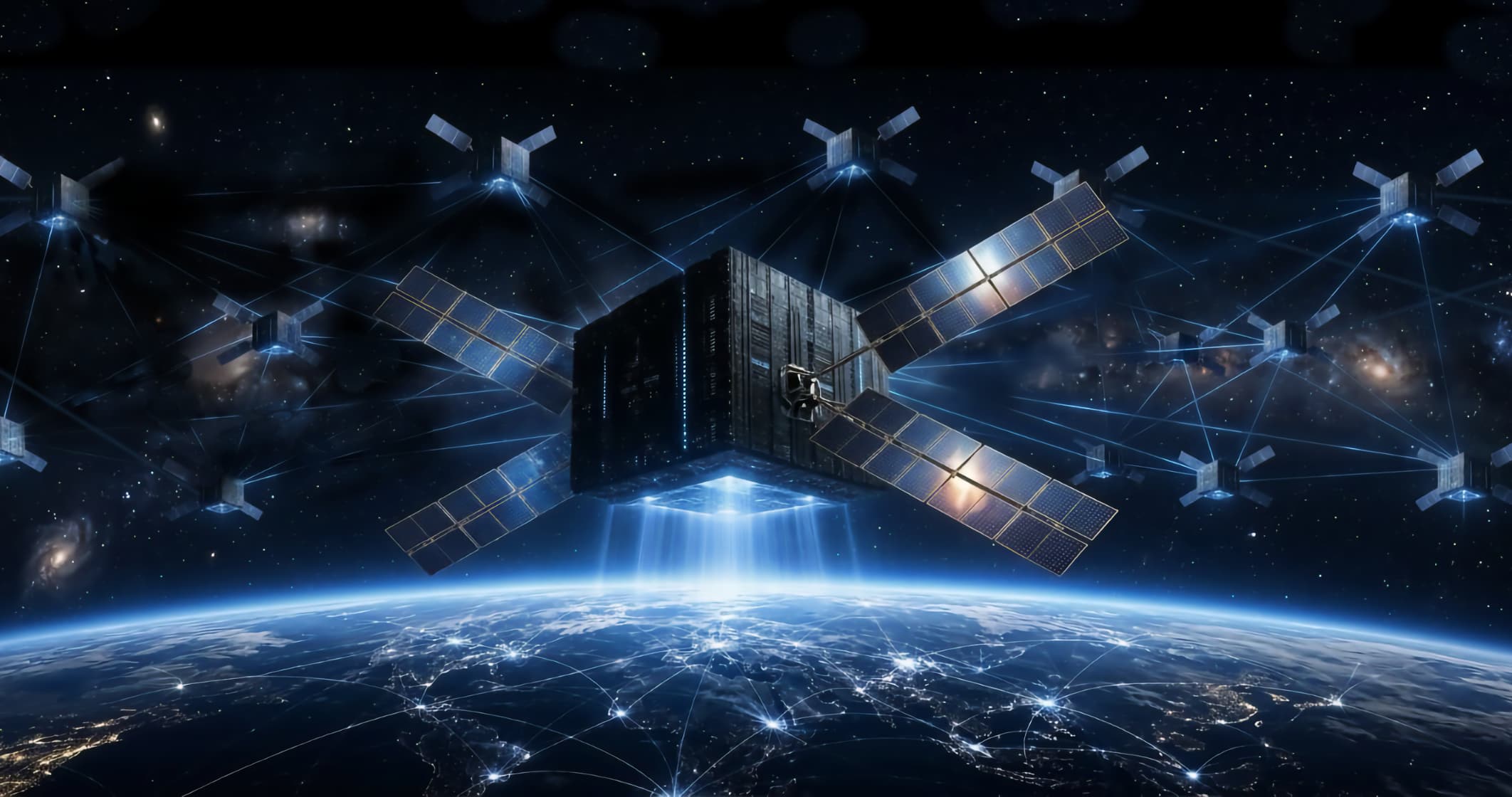
That's why the idea of launching data centers into space, and maybe chip manufacturing too, is completely justified. They won't just be flying around up there as a few large, vulnerable targets. They will be distributed across a massive number of units placed quite far apart, and shooting them down piece by piece would be very difficult. Another direction that I think will inevitably follow is mass underground construction. This also offers huge advantages. First, it's hard to destroy. Second, digging deep takes up less surface area and is less of an eyesore, which means fewer protests. It's more expensive, but ultimately it will become necessary. The main advantage of space compared to underground options is communication and energy supply. Both are much more convenient in space. On the other hand, underground gives you better radiation protection and easier maintenance, and with the development of nuclear energy, even power won't be an issue.
But the fear of AI keeps popping up again. I think the main mistake right now is our tendency to anthropomorphize AI.
It's similar to how people 200 years ago might have been scared by "some kind of technical progress" or "electrification" or even industrialization, treating them as if they were villains with a face, united in their intentions, and so on. AI is an entire stratum of various things, and within this stratum there are plenty of separate risks with a wide spectrum of ways to mitigate them. And the main thing is that we still have to get to that point, and the need for massive development stands in the way.
Tags: aitechnologysociety