Space-time-temperature

Posted on 2025-03-28 by Dmitri Zdorov

space-time-temperature continuum

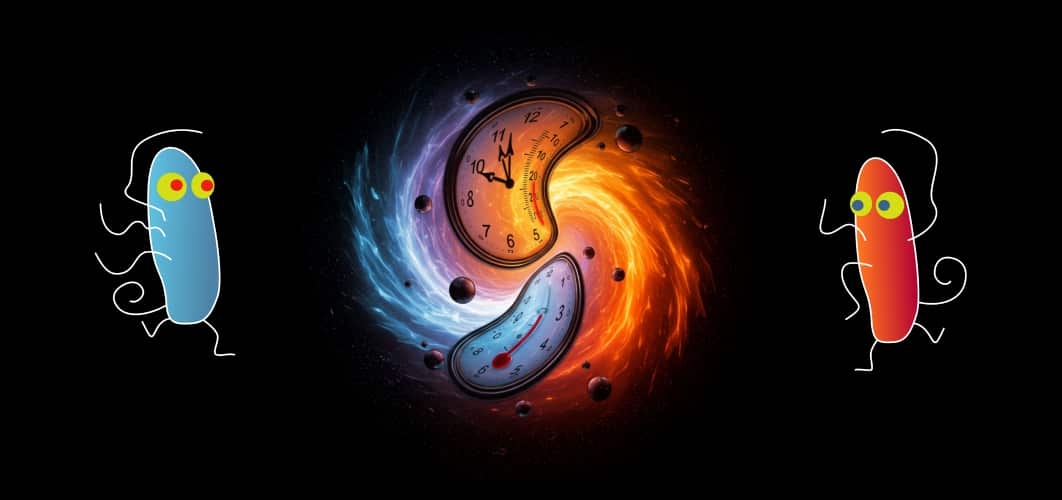
I was reflecting on the structure of our universe and stumbled upon a thought. Let's say if time doesn't exist on its own, but is part of the space-time continuum, then we could say exactly the same about temperature too. Temperature is defined as the average kinetic energy of particles — essentially, the speed of their movement or "jiggling" — which inevitably includes a time component. That's how we look at waves, after all. According to modern physics, both time and temperature can be viewed as emergent properties arising from more fundamental processes. In quantum field theory and relativity theory, space and time form a unified structure, while temperature is a statistical description of the energy state of multiple particles. Thus this illustrates the deep interconnection of fundamental physical concepts, which we often perceive as separate aspects of reality.

I'd say it's not space-time but rather space-time-temperature. At least, maybe something else too.

I poked around with our helpful pals GPT and Claude, and they say there's this Italian physicist Carlo Rovelli who apparently works in exactly this direction. Turns out he actively writes books on this topic. Well, it's about time for me to dive into some new popular science books.

Virtue vs Vice

Posted on 2025-03-19 by Dmitri Zdorov

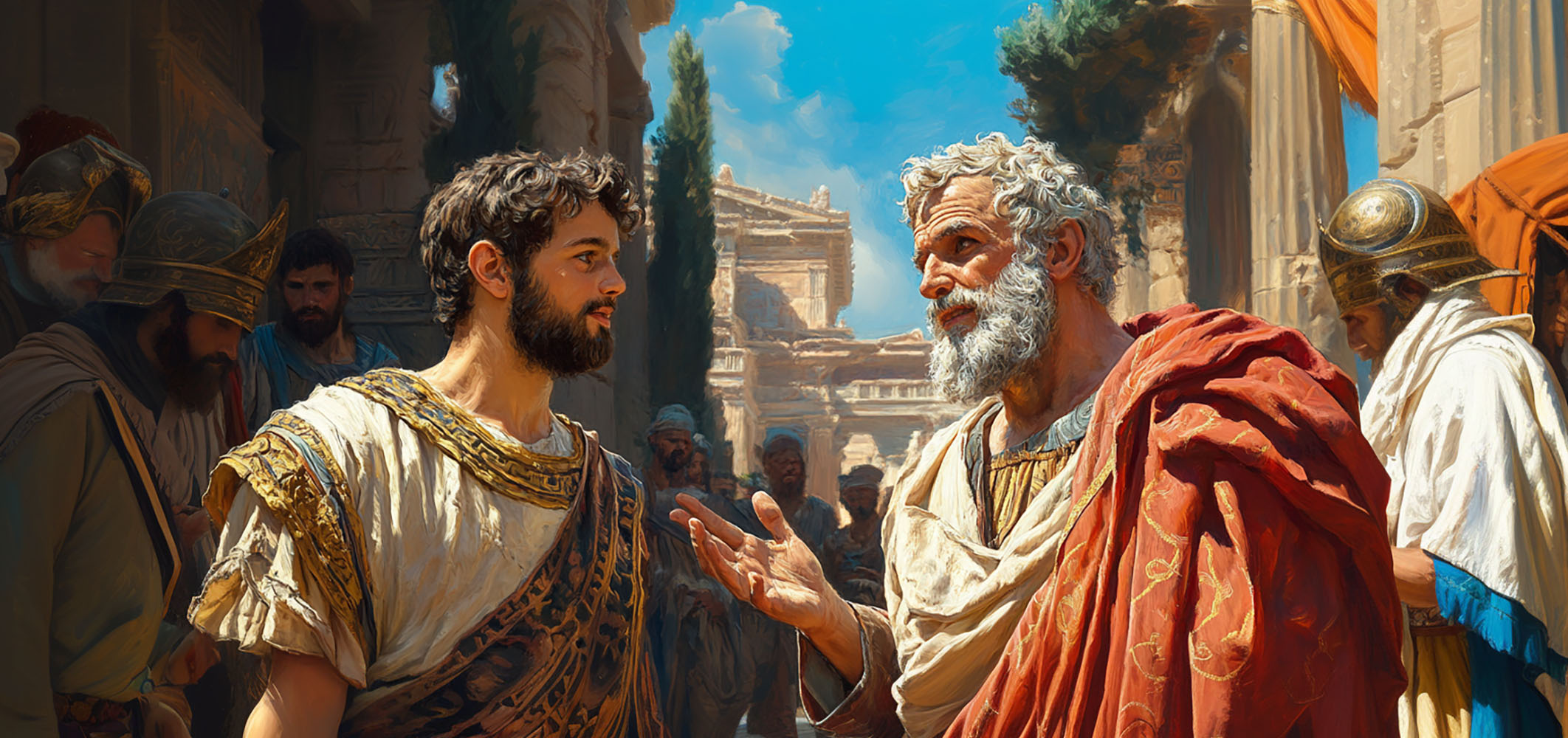
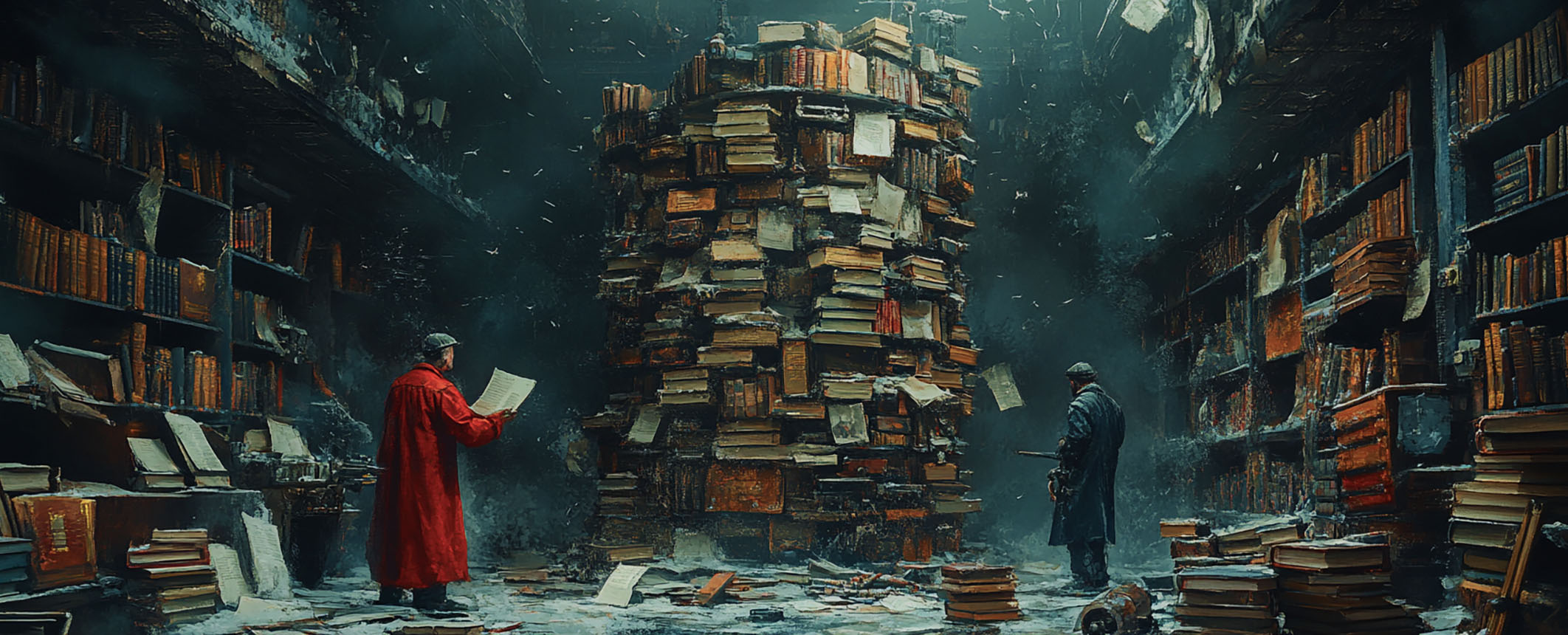
Aristotel is talking to his son

In his Nicomachean Ethics, Aristotle introduced the idea of the “Golden Mean”: virtue lies between two extremes — excess and deficiency. It’s a treatise on virtue and happiness (eudaimonia), built on the idea that happiness comes from a rational life lived in accordance with virtue.

Take courage, for example — a balance between cowardice (where fear paralyzes action) and recklessness (where action ignores all fear or reason). Both are vices. Both lead to bad outcomes — one through weakness, the other through chaos. Aristotle’s ethics are practical — about action, not just abstract theory. He wrote it for his son, Nicomachus.

These days, the same pattern plays out clearly in the last two U.S. administrations. Under Biden: cowardice and inaction — decisions delayed, problems left to rot (putting it mildly). Under Trump: reckless “boldness” — fast moves, no real plan (also putting it mildly, since both camps come with their own share of vices and shady motives).

Which is worse — paralysis or chaos? Good question. But Aristotle would say: neither is a virtue.

So here we are — left choosing between crooks and thugs. Though of course, this isn’t just about the U.S. They’re just the ones on stage.

Modern Dictators and Western Fragility

Posted on 2025-03-18 by Dmitri Zdorov

Power of all dictators

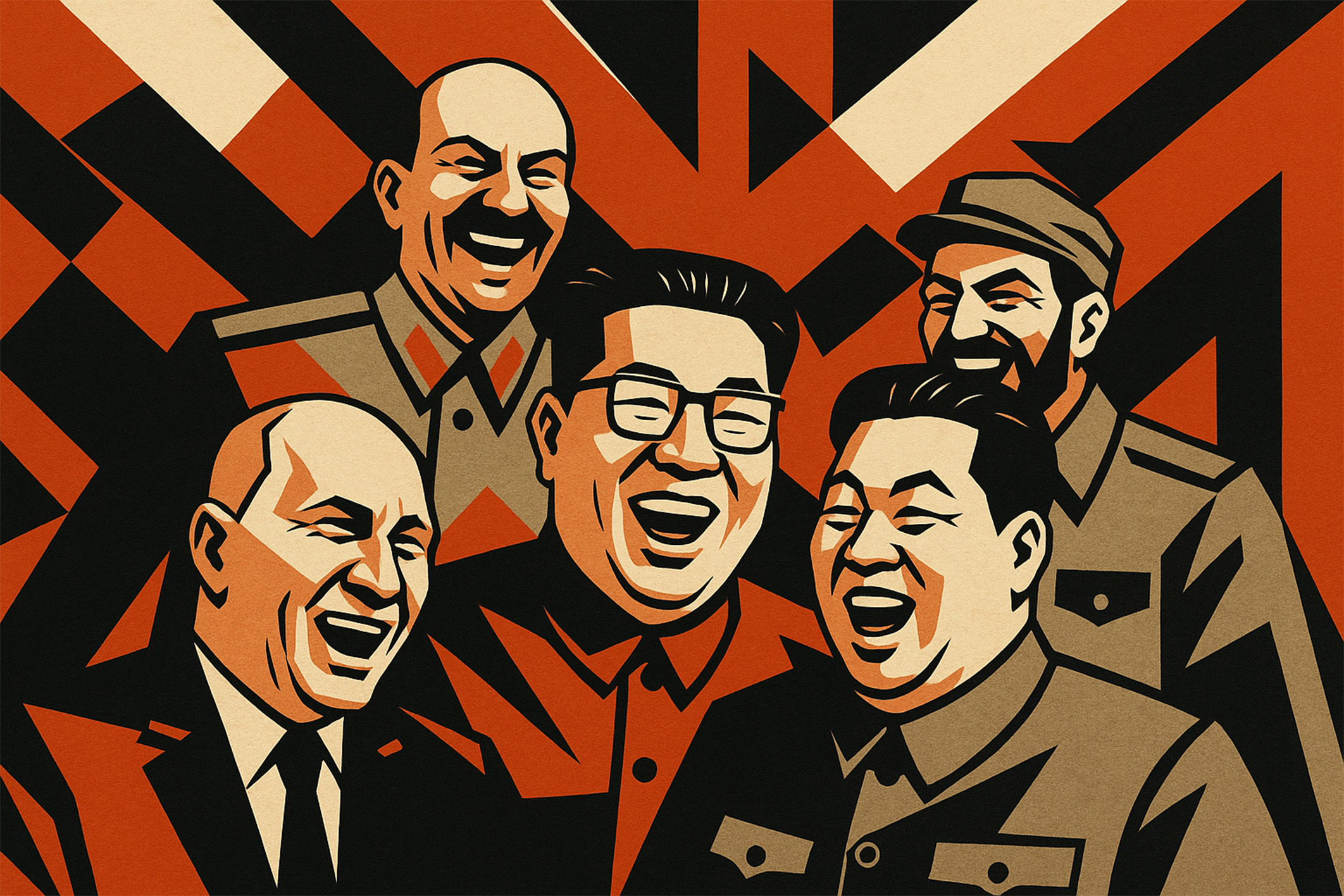
The strength of today's dictators lies in the weaknesses of the "developed" world.

Ratcheting Laws

Posted on 2025-03-17 by Dmitri Zdorov

Ratcheting Laws

A well-developed society with strong culture and conscious citizens doesn’t need that many laws or government regulations — even if the rule of law is fully enforced. The very same conscious citizens — and the companies and corporations built by them — don’t want to do dumb or evil things. You don’t have to force them. Their cultural code works better than laws.

And when there are fewer laws, you gain freedom — especially in all those cases where bending the rule is harmless. It’s just easier to live when you know you won’t be punished harshly for every tiny slip, or for something that wasn’t even your fault but the result of some random external circumstance.

This is deeply wired into us — like our sense of justice, which exists even in many animals. Everything living on Earth is family, just a matter of how distant. So what we call emotion has been whispering through nervous systems for hundreds of millions of years, carried by the same ancient molecules. Arthropods — who left our evolutionary family long before trees appeared — still respond to serotonin like we do. Even shrimp, small and alien as they seem, can be nudged by antidepressants into gentler moods, as if echoing our own chemistry across eons.

But the cultural level and self-awareness of people isn’t that high — especially in large societies. The range is just too wide. There are so many people that whatever seems acceptable to one group will be outrageous to another. Globalization and the internet have made every modern society more diverse — even small monocultural countries, let alone big multicultural ones.

So yes — laws are necessary, and changing life constantly demands new ones. The more diverse a society becomes, the more rules it will need. That’s normal.

The problem? New laws just keep piling up. And we have almost no real mechanism to remove the old ones. In most cases, this only gets reset by massive and — unfortunately — bloody disruptions: wars (especially lost or devastating ones), revolutions, disasters, or deep economic collapse.

So the best path forward is simple: Stop producing more laws unless absolutely necessary. And the best way to avoid new laws is to properly enforce the existing ones. In almost every case, there’s already a law to deal with the bad behavior — it’s just ignored.

Instead of writing a new law, stop ignoring the current one. Problem solved.

Take smoking in public places: a flood of new rules and bans, as if it had been perfectly fine before. No — it was banned for a long time. They just didn’t enforce it.

Same with illegal immigration — every country already has laws, and most of them have been there for decades. But the agencies that should enforce them don’t. Or look at Moscow: cars parked on sidewalks. It was never legal, but suddenly they passed several new regulations.

Lawmakers, instead of holding the executive branch accountable, just draft more laws. That’s actually a crisis of responsibility in executive power.

The City and Its Uncertain Walls

Posted on 2025-03-12 by Dmitri Zdorov

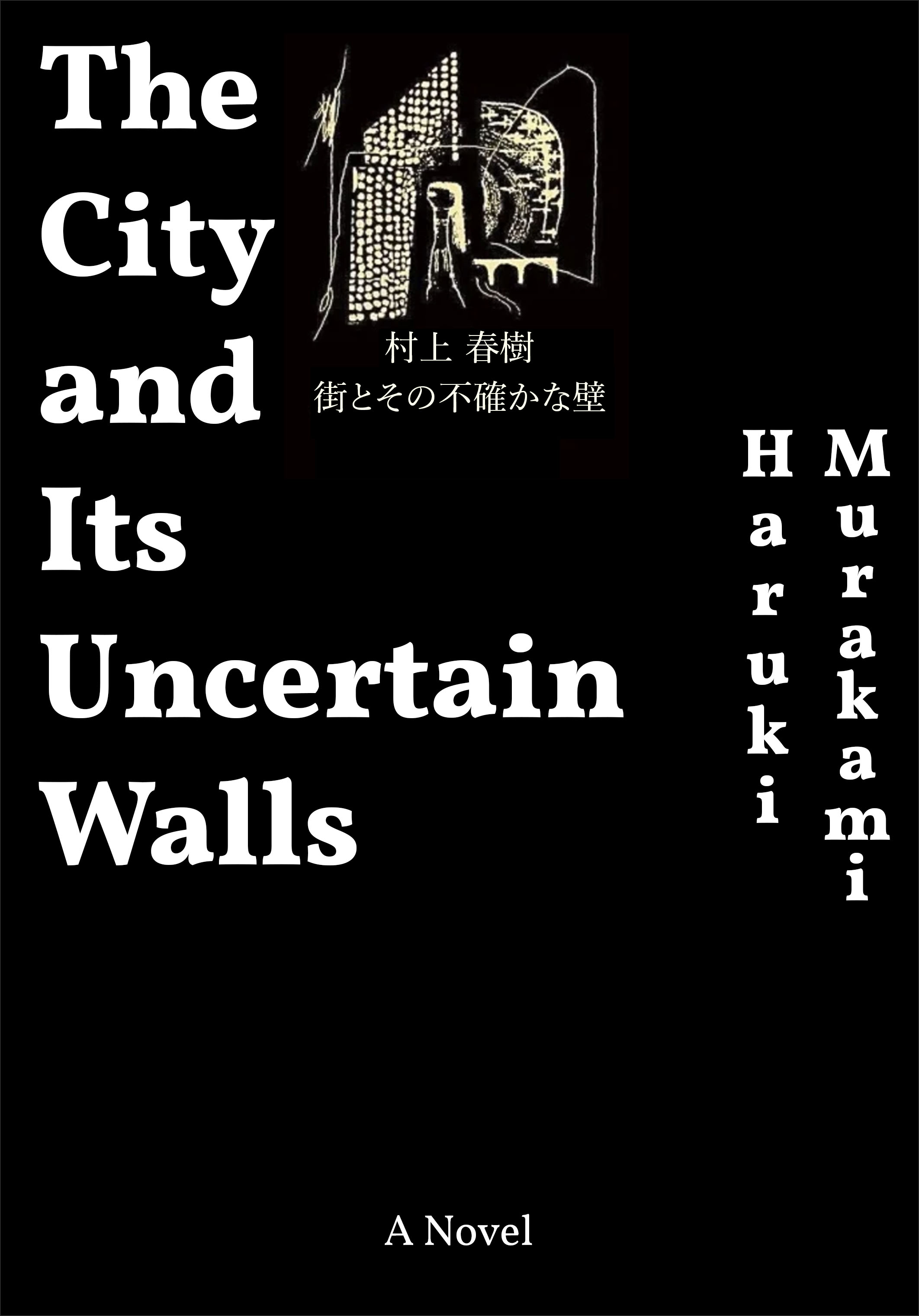
The City and Its Uncertain Walls

Haruki Murakami started out as a writer back when he owned a jazz bar in Tokyo. His first two books (“Hear the Wind Sing” and “Pinball, 1973”) did win literary awards, but to me they’re noticeably weaker. The books I really love—and the ones that are actually great—begin with “A Wild Sheep Chase,” which he wrote after he’d already become a full-time writer.

But before he gave up his other jobs for writing, he published another novella — “The City and Its Uncertain Walls.” It first came out in 1980. Eventually, he decided it didn’t meet his own standards, so he pulled it from publication, and it never got translated into other languages. But as he’s said, for years he wanted to rewrite it from scratch—and he finally managed to do it, forty years later. When COVID hit and he, like the rest of us, had to spend more time at home, he took up the project. In late 2023, the new version was finally published in Japan, under the same name. Translations started coming out not long after.

Yesterday, I finished listening to the audiobook of "The City and Its Uncertain Walls". The story runs two parallel narratives about two different worlds that end up intertwining. I liked it a lot—especially how it all came together in the end, and how, as always, the book feels completely contemporary but at the same time not tied to anything current—sort of timeless.

Unknown Unknowns

Posted on 2025-02-27 by Dmitri Zdorov

Unknown Unknowns

Modern politics in many countries has become deeply polarized. There are fewer and fewer leaders and parties near the center — fewer moderates — and more and more who refuse compromise, ignore the interests of the people, and push party lines instead. You could take a nihilistic view and say it’s always been this way. But it hasn’t — not like this.

From my point of view, the real shift began in 2000, during the U.S. presidential election, when Florida’s vote count descended into chaos. The race between George W. Bush and Al Gore was razor-thin. And in the end, it was the Supreme Court that stepped in — and, as many of us saw it, made a dishonest and disgraceful decision: to stop the manual recount. There were ballots under dispute, and they could’ve just been opened and counted by bipartisan teams — no mystery, no drama. They even started doing it — and it quickly became clear that if the count continued, Gore would win. Then the Court stepped in and shut it down. Bush won — and the backlash from the left was massive. Then came 9/11, the war in Iraq, and a cascade of policies that many deeply opposed. That only fueled more radical energy on the left, and a lot of independents began to agree with it. Obama’s victory later added more fuel — it gave rise to what’s now called “woke,” and the pendulum started to swing wildly.

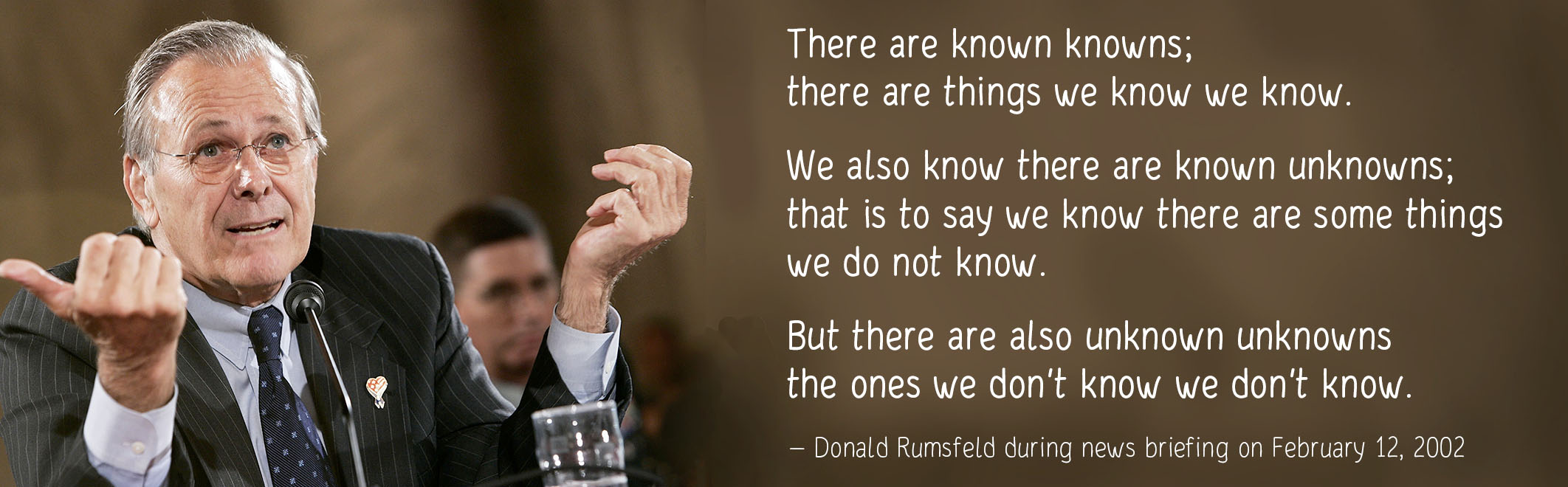
But beyond the wars, the billions spent, and the oil contracts handed out — something else stayed with me. Back then, they released a documentary where Donald Rumsfeld, the Secretary of Defense, talked about uncertainty. He said:

There are known knowns — things we know we know.
There are known unknowns — things we know we don’t know.
But there are also unknown unknowns — things we don’t know we don’t know.

At the time it sounded cryptic, maybe even cynical — but now, in the age of AI, it hits differently. Suddenly that old war in the desert echoes into today’s world — where the biggest challenge might be the things we can’t even see coming.

My singularity

Posted on 2024-12-15 by Dmitri Zdorov

My singularity

My own, internal, subconscious perception of the singularity boils down to this: at some point, everything will converge into one highly unpredictable moment, and after that, everything will either be radically different, or there will be nothing at all.

Like, I'll be simultaneously dying of old age just as some mega-cures for eternal life are popping up; we'll simultaneously discover some mega-useful things while some cataclysms are right on the verge of destroying everything; and a super-smart intellect will either wipe us all out or elevate us to a whole new level. Or, say, I'll finally figure out how the world works, and at the very same time it'll turn out we're all in the Matrix, or that all of life is a simulation, or a game, or whatever. All of this happening all at once—coming to a head—that's the singularity.

Though maybe it won't happen that way for me personally, it just feels like that's exactly how it's going to go down.

That being said, I'm not really talking about the end of the world or death here. I see the singularity not as an end, but as an event horizon—past that point, it's just completely unclear what comes next, and it's hard to prepare for it. As for ends of the world, I feel like they get predicted super regularly, at least every 12-15 years or so. I even remember when there was all this talk about how "Mikhail the Marked" would come, and how this was supposedly prophesied everywhere as an absolute sign of the end times. And man, Gorbachev with that birthmark on his head really threw fuel on that fire. Just as much as Y2K or the ending Mayan calendar. And so here we go again.

Secret Dactyl Language of Soviet Children

Posted on 2024-12-11 by Dmitri Zdorov

Soviet School-class

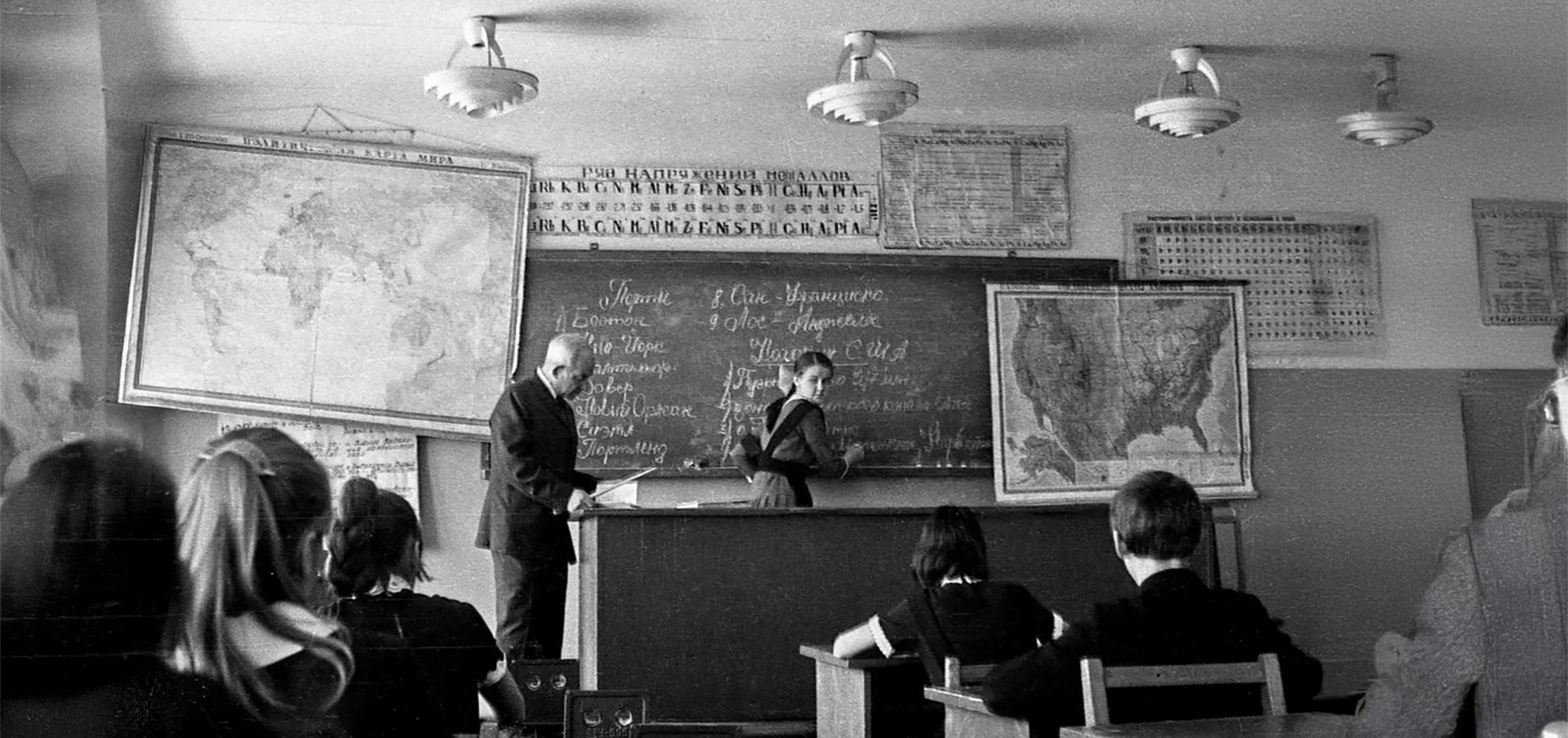
I grew up in the USSR, and obviously attended a quite typical Soviet school, there, in our Soviet schools, every lesson lasted 45 minutes. During almost every class the teacher would call pupils to the blackboard to recite poems, solve equations, or diagram sentences. Being put on the spot was routine, and so was getting stuck. Whispering answers was risky—teachers were trained to spot it—so children adopted a silent “finger alphabet” to feed each other clues without a sound.

Outside school, this secret Soviet manual alphabet thrived in playgrounds, summer camps, and street games. It let kids whisper tactics during games, signal who was “it,” or trade jokes across a crowded yard—no lip‑reading adult the wiser. By age ten, most city children could spell at conversational speed, giving them a lifelong knack for silent, non‑verbal messaging.

Russian kids called it немой язык (nemóy yazýk, “mute language”). Technically, it’s a manual alphabet—one gesture per Cyrillic letter—rather than a full sign language like Russian Sign Language (РЖЯ), which encodes words and grammar. In English, it might be called the Soviet children’s dactyl alphabet, playground finger code, or Russian dactyl cipher.

The Soviet Children’s Finger Alphabet

Below, each Cyrillic letter is shown with its Latin equivalent, a gesture description, and the kid logic or mnemonic.

Letter Gesture Mnemonic
А (A) Thumbs‑up Resembles lowercase “a”
Б (B) Tap or point at eyebrow B = brow
В (V) Point at temple or tug hair V = visok (“temple”)
Г (G) Index finger bent at 90°, touching mouth corner Shape of “Г”
Д (D) Slide finger under nose like a moustache Shape of “Д”
Е (E) Two index fingers, tips hooking together (“two-hooks”) E = “gate”
Ё (Yo) Е gesture, then spit or blow over fingers Two dots of “Ё”
Ж (Zh) Three fingers up, other hand lays a finger across Shape of “Ж”
З (Z) Point at teeth Z = zub (“tooth”)
И (I) Two fingers up together Uprights of “И”
Й (J) И gesture + blow or spit The breve over Й
К (K) Fist K = kulak ("fist")
Л (L) Spread V shape downward “Л” outline
М (M) Both hands make “Л” gestures side by side Two peaks (“М”)
Н (N) Touch mouth corners with index fingers Bar across “Н”
О (O) Make circle with fingers or mouth Self‑evident
П (P) Touch mouth corners with fingertips Two uprights and a roof
Р (R) Lips in “O”, one finger beside Loop plus stem
С (S) Curve thumb and index into a semicircle Printed “С”
Т (T) Index fingertip under lips “Т” shape
У (U) Tug earlobe or point to ear U = ukho (“ear”)
Ф (F) Lips in “O”, index finger across Circle with bar (“Ф”)
Х (Kh) Cross two fingers upward “Х” shape
Ц (Ts) Two fingers up, hook finger below with other hand Tail of “Ц”
Ч (Ch) Tap/scratch wrist where a watch would be Chasy (“watch”)
Ш (Sh) Three fingers up together Three stems of “Ш”
Щ (Shch) Ш gesture plus hooked finger below Tail of “Щ”
Ъ (Hard sign) Hit open palm with fist, then spit over palm Hard sign + outside dash
Ы (Y) Same as Ъ, then open the fist: two parallel palms Two pillars of “Ы”
Ь (Soft sign) Hit open palm with fist Soft sign without dash
Э (Eh) “C” with hand, cross with other index Mirror-E (“Э”)
Ю (Yu) Lips in “O”, touch side with finger Circle + stem
Я (Ya) Stick out tongue, point to self, or tap chest “I” (я), or reversed “R”

Digits 0–10 used finger counts. For multi-digit numbers, sign each in sequence. A question mark: hooked index finger.

It peaked in the 1970s–80s and faded after the 1990s as mobile phones and digital messaging took over. Still, reports persist of kids in some Russian schools—often coached by parents—passing on this non-verbal schoolyard slang.

For decades, millions of Soviet kids learned a covert communication code to bypass surveillance, signal friends, and play in silence. It stands as a curious linguistic artifact: a real-life playground cipher, invented and spread without adults or official sanction, and now almost forgotten outside Russian-speaking circles.

ThinkPad-based workspace

Posted on 2024-11-30 by Dmitri Zdorov

ThinkPad-based work space

For my personal projects, I mostly use Macs, but for work, I need a Windows computer. I currently have a Lenovo ThinkPad P1, and I use it with a Thunderbolt dock and an external monitor. My colleagues at work often ask me to recommend a list of gear to get so they can have a similar setup. So, here we are:

The heart of any workspace setup is a computer. I assume you'd prefer a portable one that you might want to take with you when you travel, and the ability to connect it easily is important. Let's assume you are using a ThinkPad as the main machine. Then we need a dock.

  1. The best and most suitable dock is the Lenovo Thunderbolt 4 Dock (and cables) for ThinkPads that draw more than 100W of power. amzn.to/3ZddTP1 It costs more because it's faster, has more ports, and, most importantly, powers the ThinkPad sufficiently, so you do not have to connect a power supply separately.

  2. Alternatively, there is a simpler dock: Amazon Basics Thunderbolt 4/USB4 Pro Docking Station. amzn.to/4iacykH This is virtually identical to the one I am using right now, and I have to use it in combination with the power supply.

  3. High-end monitor: I think the best monitor to get right now is the Dell UltraSharp U4025QW. amzn.to/3VcyDFy This is 5K, wide, and slightly curved. It's pricey, but it has a Thunderbolt dock integrated into it.

  4. Lenovo ThinkPad 230W Slim Tip AC Adapter is the one for our ThinkPad models. amzn.to/4g8pDcr You'd need to use it with options 2 and 5.

  5. Simpler monitor option: LG 32UN880-B 32" UltraFine 4K Display. amzn.to/41ft6BJ I have a previous version of this model at home; the colors are just great.

  6. Wired keyboard: I like my keyboards to be wired, and I like the TrackPoint. Thus, I prefer the Lenovo ThinkPad Compact USB Keyboard with TrackPoint. amzn.to/3ZbwD1f

  7. Good wireless keyboard: Many people like wide, mechanical wireless keyboards. If this is the case for you, I'd recommend the Keychron K17 Max QMK Wireless Custom Mechanical Keyboard. amzn.to/3OyP9f3

  8. Simple mouse, from Lenovo: amzn.to/3B87LQc This is a very simple yet great wireless mouse I use in the office.

  9. Better mouse: At home, I use the Alienware AW720M mouse. I like it because it's more precise. amzn.to/3Vjx0pl

  10. Speakers: I tried many different ones, and I like the type called sound monitors because of the least distorted sound. The model I have at home is PreSonus Eris 3.5 Studio Monitors. amzn.to/3Zyab41 They also have bigger models, but I think for desk usage, this is plenty. Make sure you get some kind of Desktop Speaker Stands like amzn.to/41agc84

  11. Portable microphone: I really like lavalier mics because they are good for travel. I have the iRig Lav Lapel model. amzn.to/3Zd3jHF

  12. Stationary mic: For my desk setup, I use the Audio-Technica ATR2100x-USB Cardioid Dynamic Microphone. amzn.to/4fQNPAm

  13. Webcam: When you work on a big monitor, you often want to have a dedicated webcam that also works for Windows Hello. The Lenovo Performance FHD Webcam is the model I found to work well. I haven't got to ordering it yet, but I want to. amzn.to/3B6UNC4

  14. Desk mat is also a useful thing. I have one like this: amzn.to/3B6ioTs

  15. Large headphones: My favorite are the beyerdynamic DT 770 PRO 80 Ohm Over-Ear Studio Headphones because they are the easiest to wear for a long time. amzn.to/3D1Mh7U

  16. Lamp: I think a good desk lamp is a great addition. I have the Xiaomi LED Desk Lamp Bianco because it is dimmable, has a nice light color, can be controlled with iPhone, and looks awesome. amzn.to/4g8rUnZ

Most of this can be used for a desktop computer and a Mac too, but I will try to create more fine-tuned recommendations for such cases soon.

The True Messenger Bag

Posted on 2024-11-24 by Dmitri Zdorov

Messanger Bags

Courier bags—­or, as they’re now mostly called, messenger bags—aren’t just a sideways backpack or a random shoulder bag. If you’re not trudging up mountains, a messenger is far handier for normal city life and even for travel. Yet I’ve almost stopped using them, simply because I can’t find the right one anymore.

What makes a messenger special is its sheer practicality: roomy, comfortable on foot or bike, and easy to load or unload even while moving—bulky stuff included.

There used to be a Hong Kong company, Tough Jeans, that made gorgeous bags, proper messenger models included. Their clothes were solid too; overall, an excellent brand. About eight years ago the owners sold the business to some Chinese traders, and—at least to my taste—nothing good survived. I still own a few of their bags. One, bought twenty years back, is wearing thin: the lining’s torn, a couple of plastic parts snapped. Another bag stayed in Moscow, and two more left along with relationships that fell apart. And the brand’s current line has nothing worth buying.

To reject a bad bag in a heartbeat I use two rules of thumb:

  1. Capacity. Can it swallow both a basketball and a pizza box (not necessarily together)? If yes, it’s big and versatile enough.

  2. The flap. A real messenger bag closes with an overlapping flap—­a generous, heavy piece of fabric. Flip it open, drop something in, flop it back, and its own weight (plus whatever’s stashed in the little pockets sewn into it) keeps the bag shut. It must still cover the load when the bag’s overstuffed, and it can fasten—but it shouldn’t need to.

Beyond those two rules you still want the usual: a comfortable, easily adjusted shoulder strap; smart pockets; waterproof fabrics; sturdy zippers and buckles.

Bags that tick all those boxes just aren’t made anymore—­or I haven’t found them, and I’ve hunted hard. I once ran a comparison website devoted purely to messenger bags, featuring over a thousand models from more than a hundred brands. We even tried sewing our own to my design—good design, but without a proper factory we couldn’t hit the needed quality.

So these days I mostly carry backpacks, but I do miss a good messenger bag.

Daily logos

I started writing a blog on this site in 1999. It was called Dimka Daily. These days many of my updates go to various social media platforms and to the /blog here at this site, called just Blog. I left Daily as archive for posterity.