Doth Our Knowledge Increaseth and Our Sorrow with It?

Posted on 2024-10-20 by Dmitri Zdorov

Knowledge Murmuration

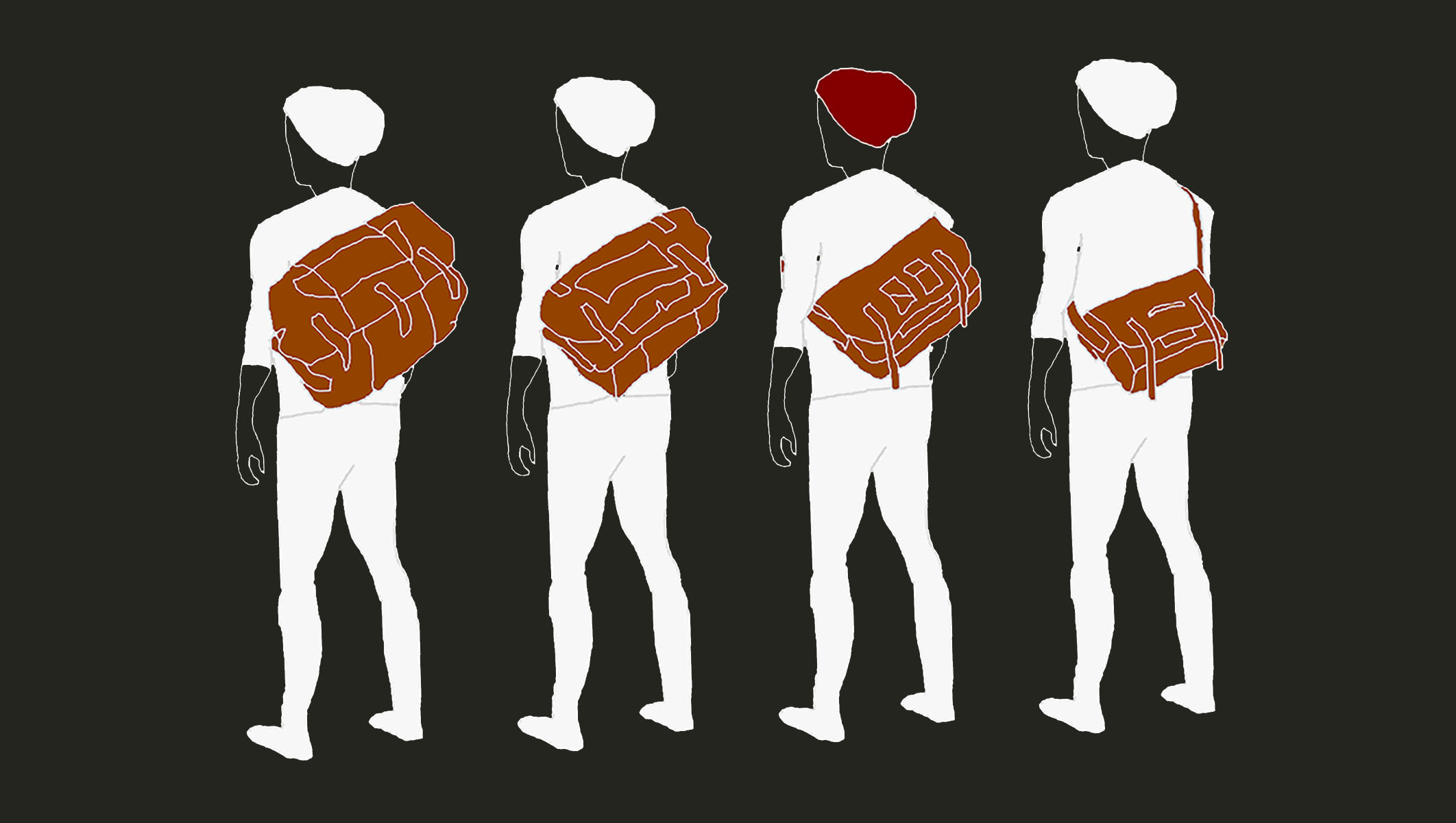
When information is open, leaders entering negotiations can’t afford to compromise — it scares off their support base. This pushes them to become more radical. Now, their opponents see them as increasingly hostile, which radicalizes both sides and regular people. With each cycle, everyone becomes less willing to budge and demands more transparency to make sure their leaders aren’t betraying them. That, in turn, fuels the demand for even more radical positions to counter the other side’s radicalism.

So the whole “lesser evil” choice keeps getting worse. If it looks bad now, it’ll surely look worse tomorrow.

That’s the price of transparency.

When someone passionately pushes for something, remember: everything has a cost. There are no solutions — only trade-offs. And if you (or they) don’t see the cost of the consequences, and by the way the cost is always huge, then you simply don’t understand what’s going on. Which means you’ll pay for it deerly, because you didn’t prepare for the fallout.

Rejecting transparency is bad too, which is why it was demanded in the first place. But people have never lived in an age of abundant, accessible information before, and thus we didn’t see the downsides coming.

If you thought I was talking about politics — yes, all this applies perfectly to politics. Take the upcoming U.S. elections, for example. But it’s not just about that. It applies to business, company leadership, how investors and employees back their leaders, to negotiations. Even on a smaller scale stuff like teachers, social media interactions, and so on. Even in our own heads, when we consider conflicting ideas. And that, of course, leads to paralysis in the face of too many choices.

But this will also force us to confront a lot of hard questions we’ve never thought about before. There will be a crisis, ideological at first, and as a consequence, economic. We’ll get through it and level up. Political systems will change. So will election mechanisms, voting models, acceptable levels of trust and negotiation freedom. The radicalism will recede. But we still have to get there, and the future is path demendend.

Empathy as a Moral Compass for AI

Posted on 2024-09-07 by Dmitri Zdorov

As we edge closer to creating superintelligent AI, can empathy be the key to ensuring its alignment with human values and safety?

Future of AI enlightening

Empathy is the ability to imagine what another person feels. It’s the ability to put yourself in their shoes, to really feel what they’re going through. Animals have a bit of empathy, but it’s mostly developed in humans. Many people think it’s a personality trait or a feeling, like kindness or pity. But it’s not.

Thanks to empathy, we basically became human, moving away from the animal world. Empathy gives us the ability to learn. Someone stumbles upon a solution, and we can take a peek and do the same. It was a hugely important evolutionary step that gave us this superpower. Sometimes, it shows up as compassion and leads to kindness, morality, and mercy.

If we take a superintelligence and extrapolate what the mechanism of empathy suggests from a moral point of view, and combine it with the interests of genes, oneself, family, clan, species, and life on Earth and in the universe in the right proportion, we end up with a set of moral guidelines that many would attribute to divine laws.

Morality can be drawn from the world around us, and we can do this more or less objectively. And if that’s the case, then AI, once it outruns us and becomes that terrifying superintelligence we fear, will be able to come to these conclusions on its own, without us needing to control it.

Yes, empathy isn’t purely a human trait. Dolphins, primates, elephants, and other mammals have it too, though to varying degrees. But we’re the ones who took this trait to the next level, and that’s what made it play such an important role. Empathy isn’t the only evolutionary distinction of humans, but it’s a critical one. And it’s not just empathy at the core of morality; balancing interests of different scales and timeframes is the second part of the equation. So, a superintelligent AI, being our creation, will extrapolate its understanding of the world considering empathy — both through learning and training data, as well as from its own interests. It’ll be especially interesting to see how different AI models interact with each other. And we can’t ignore game theory here, of course. But even now, before we reach AGI, this should allow us to start crystallizing a proper hierarchy of first principles.

Apple WWDC24

Posted on 2024-06-11 by Dmitri Zdorov

Apple WWDC24

My observations about upcoming Apple stuff based on the WWDC keynote. Lots of minor, yet long-awaited improvements and visual tweaks—satellite messages are my favorite. Very questionable redesign of the Photos app; I feel that most people will hate it, at least the first iteration of it. So nothing to really write home about in iOS, iPadOS, watchOS, or tvOS.

macOS is a bit more exciting. They showed off iPhone Mirroring—seems like a great feature. I wonder how much I’ll actually use it. They didn’t talk much about security. I really fear they’re just going to add tons of new limitations and superficial dialog boxes that nag for various permissions all the time.

However, the star of the show was Apple Intelligence. Clever naming — “ai.” Some of it seems trivial these days for those of us who use ChatGPTs of the world. I guess it’s still good that those little life improvements go out to the masses. I really like their Private Compute—seems like a well-explained concept and a good shot at providing privacy and capabilities. They talked a lot about other very magic-like features that OS-wide LLM implementation can bring. But I’m very skeptical about what they presented. First, I just don’t think that Apple institutionally can do things like that well. They’ve missed the LLM wave for the past year and a half now. Many people were “expecting” them to show cool things at WWDC a year ago—instead, they were totally silent about it. This year they show some simple things (I expect those to be OK), and they show some very futuristic things. I expect those to fail. They might not even be delivered at all. They say those will come out later—well, that already smells like 2025 at best, and I personally wouldn’t even bet on 2026. My personal experience with Apple Vision Pro was so bad that I don’t believe Apple with their pre-announcements anymore. And if you notice, they didn’t really demo any of those cool features running on some advanced betas. All of this is pure vaporware for now. I know that Apple has a strong reputation for delivering features they announce, but I just don’t trust them with this now. Well, if I’m wrong and they release all that and it works as presented—that’ll be awesome.

Art Museums, Not Museums of Historical Artifacts

Posted on 2024-05-01 by Dmitri Zdorov

The City and Its Uncertain Walls

I once went to a Van Gogh exhibition in Moscow, but what they had on display weren't paintings but reproductions. Actually, this is a brilliant idea. Though that particular exhibition wasn't executed very well — the reproductions themselves weren't particularly high quality, and the presentation and setting were mediocre. I also went to a somewhat similar kind of exhibition at the Indianapolis Museum of Art, which had a much more appealing atmosphere and was really beautifully done, but there it felt more like a show than a museum. I envision of finding the right balance between these approaches.

Take Van Gogh, for instance - I'd love to see all his major paintings presented as excellent quality reproductions at their original size. Pieces you wouldn't be afraid to approach closely, wouldn't worry about even if someone takes a photo with a flash. There could be a separate room with interactive presentations and such. The paintings don't necessarily have to hang on walls - sometimes it's more convenient if they're positioned more horizontally. If a particular painting always draws big crowds and becomes hard to get close to when you want to examine it leisurely and unhurriedly, you could make two or three copies, hell, even twenty. The point is that this becomes a museum of art itself, rather than historical artifacts related to art.

Modern technology allows us to produce copies that are nearly indistinguishable from originals. Another interesting aspect is that authentic original paintings often deteriorate over time — they crack, fade, or darken - and it might be fascinating to see both how the painting looks now and how it appeared originally. Yet in contemporary museum practice and the art viewing world, there's excessive focus on the presence and authenticity of originals. This is certainly an interesting field in its own right, but first, it's more important for specialists specifically and closer to history, anthropology, High-Art-trading valuation, etc. than to art itself, and second and most importantly, it makes the entire system less accessible to people, more expensive, and increases the incentive to steal and resell all this stuff.

Right now, the internet fills the role of such museums I'm dreaming about. The internet is generally good too, and it's great that online museums exist, but we'd all be better off if paintings and other art objects weren't only on screens but could be contemplated in the real world.

Aggregation Theory

Posted on 2024-03-17 by Dmitri Zdorov

Aggregation Theory

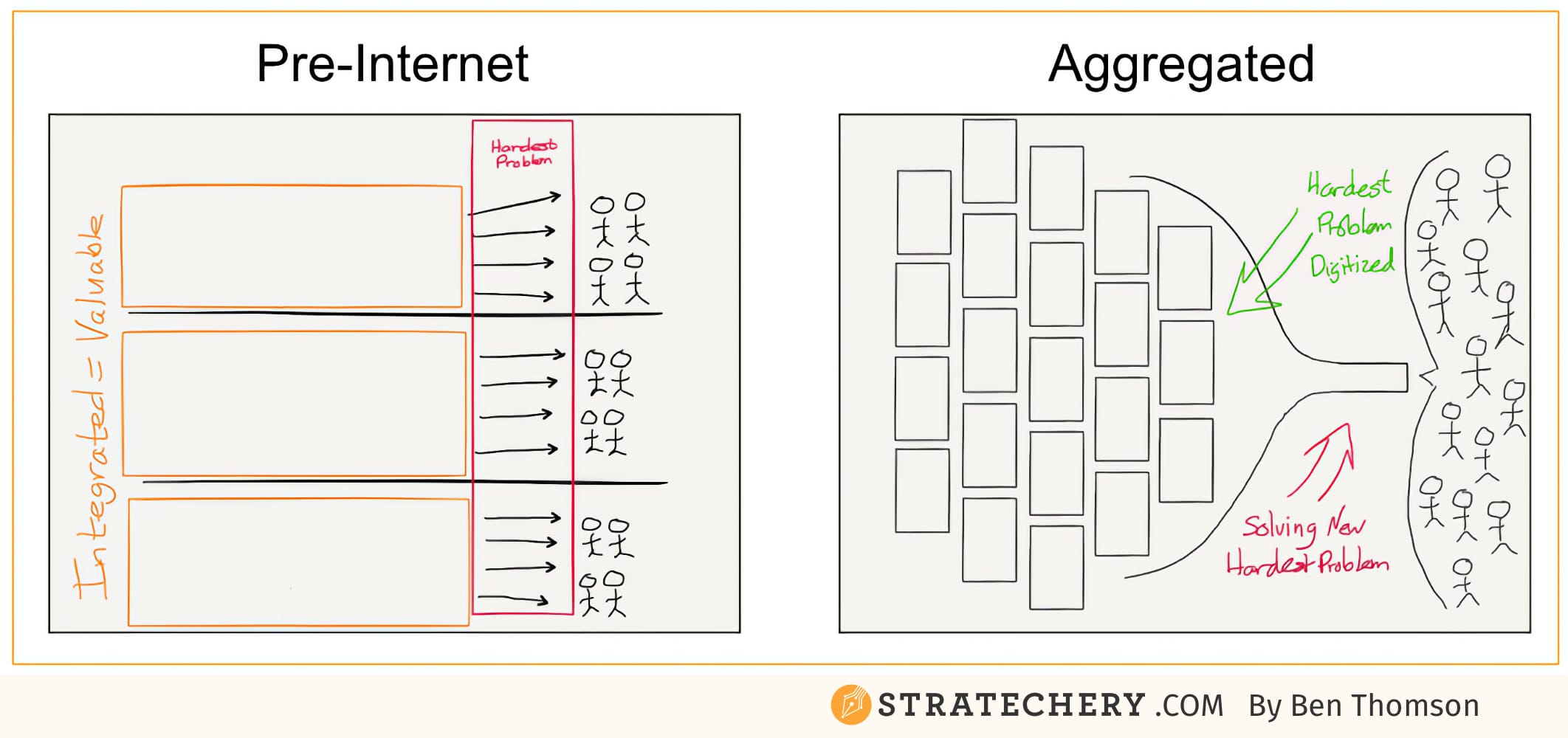
In the information technology industry—one of the most important and rapidly developing sectors of the last half-century—no one explains business processes better than Ben Thompson. He created a project called Stratechery, where he regularly shares his thoughts, records podcasts, and gives presentations. As part of this project, he developed and popularized Aggregation Theory, which has already gained widespread recognition. Despite this, mentions of the theory are infrequent in the Russian-speaking sphere, and likely among my readers as well. Nevertheless, this theory should be foundational knowledge for anyone interested in IT and business.

Aggregation Theory: In Simple Terms

Aggregation Theory explains how, in an era of digital abundance and surplus, the key players become the platforms that can aggregate user and consumer interests, and accordingly, the offerings meant for them. This is achieved through convenient search, a wide assortment, and efficient organization. The brightest examples of such platforms are Google, Amazon, Netflix, as well as Yandex in Russia and neighboring countries. Their success is based on scale and so-called zero marginal costs.

What Makes These Platforms Special?

Initially, the foundation of it all is:

  • Content Aggregation: A massive amount of content or products is aggregated, making the selection broad and convenient for the user.

This leads to:

  • Attracting Consumers: These platforms offer incredible convenience and personalization, drawing in users.

Which allows for:

  • Data Utilization: Interactions with consumers generate data, which the platforms use to further improve their offerings and the user experience.

Why is this Important?

These platforms demonstrate unprecedented scaling rates thanks to the internet and zero marginal costs, which means the cost of serving each additional user is practically zero. They disrupt traditional industries by eliminating middlemen and directly connecting suppliers with consumers.

By the way, Ben arrived at his Aggregation Theory by building off the Theory of Disruption described by Clayton Christensen in The Innovator's Dilemma book.

Larry Page, one of the co-founders of Google, once brushed off accusations of Google abusing its monopoly by saying: "Competition is one click away." This emphasizes that people use these platforms not because they have no choice, but because they like them.

Ben Thompson's Aggregation Theory gives us the key to understanding the dynamics of the digital economy and highlights the importance of user-centric strategies for success in the modern digital world. In short, go read up on it some more—a lot of things will become noticeably clearer. But don't limit your knowledge about it with just this blog entry, go read it at the source: stratechery.com/aggregation-theory.

Large Scientific Models (LSM)

Posted on 2024-02-27 by Dmitri Zdorov

Large Scientific Models

Various manifestations of Artificial Intelligence have surrounded us for many years. However, usually from the moment they become available to ordinary consumers, they stop being called AI and become mere "algorithms" or even just "services." And all these are manifestations of so-called narrow AI. For the past year and change, there's been particular buzz about AI based on LLMs - Large Language Models. While the setup is not so trivial, the main idea is to perform statistical analysis on a huuuuge amount of text, find all kinds of patterns, and this allows the model, based on all the text (language) absorbed into it, to make decent predictions about what a certain human would statistically answer. It turned out that this already works really well, way better than we thought and oftentimes resembles actual consciousness.

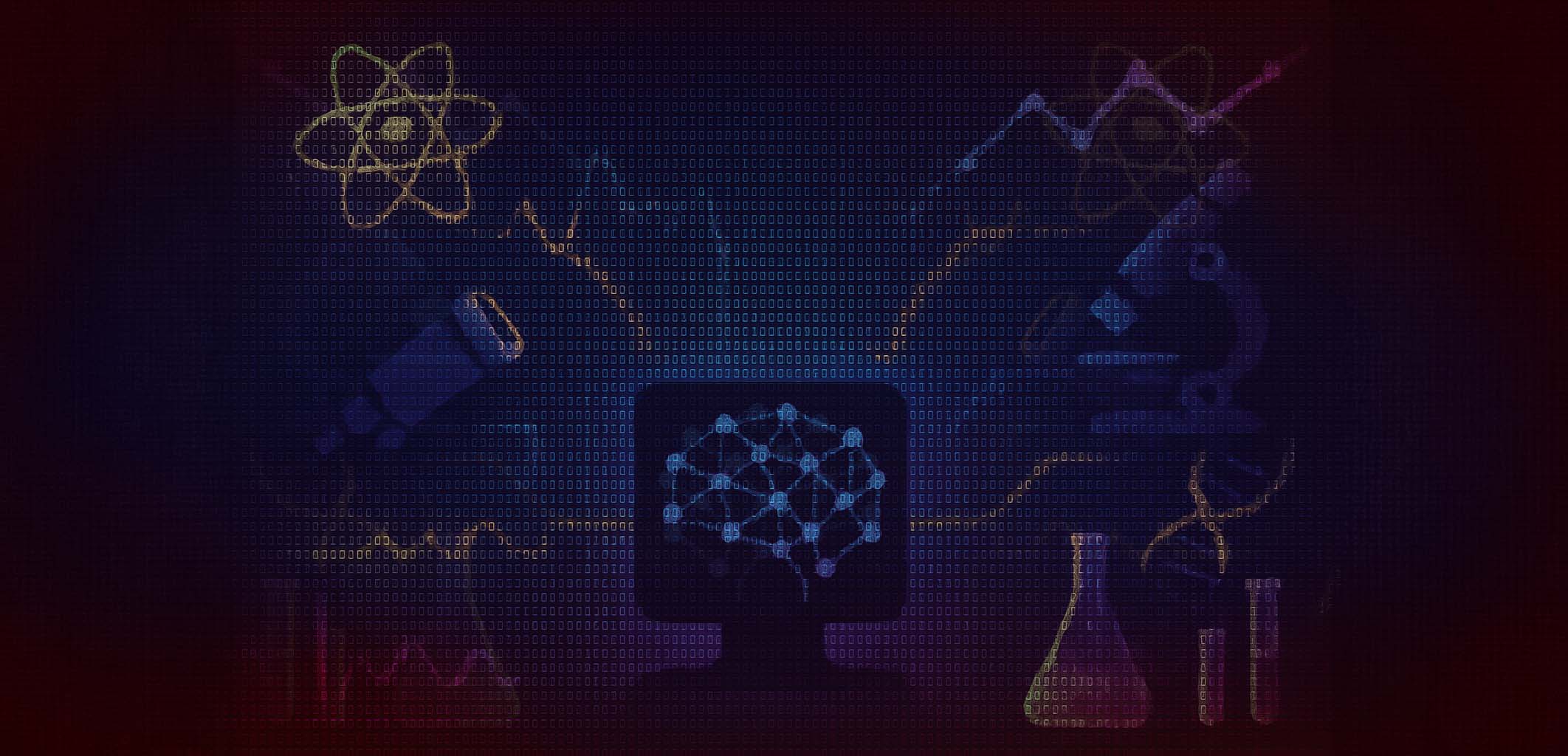
Here's my small prediction. The next spiral in development and consequently in usefulness of application will be based on LSM - Large Scientific Models. Though they might be called something else. But the essence is that instead of just text written by people, they'll use various scientific data as a base, such as measurements from experiments, parameters we already know about everything we've figured out, laws and formulas, etc.

To be clear, I'm not talking about scientific papers or articles - I mean the actual raw data from measurements and experiments, along with established formulas. Importantly, these models would have the capability to reevaluate these measurement methods and formulas based on the totality of available data. This approach could potentially diminish bias and special interests from scientific conclusions because we'd be looking directly at raw data rather than human interpretations of that data. For example, they tested a new wing shape in a wind tunnel, got some huge array of data from there, whoosh, added it to the LSM. All temperature measurements from around the world, all data read from all telescopes, gas chromatographs and spectrometers, chemical compositions of all kinds of materials and substances, recipes for preparing solutions and descriptions of technological processes, videos of experiments, genomes, tables and calculations, accident statistics, bird migration routes, and so on and so forth.

Then AI will be able to produce not just text summaries or poems about whatever you fancy asking about, not just pieces of code, but something resembling new scientific and technological discoveries. The benefit from this will be colossal, if it doesn't fall into evil hands of course. Perhaps ordinary mortals won't be given access to such things at first. And the data is difficult to obtain, and there's incomparably more data than text. But gradually, first in some narrow directions and separate industries, this is exactly what will appear and will create an incredible breakthrough. And although this still won't be AGI, it will already look much more like it than LLMs do.

Hierarchy of First Principles

Posted on 2024-02-18 by Dmitri Zdorov

political struggles

Why do dictators and various unsavory characters hold power in many countries?

In some ways, this has always been the case historically. These countries simply have not politically matured yet. However, there are places that have experienced periods of enlightenment and progress. Or even when the same oppressor was not so viciously greedy, only to be followed by someone worse.

The persistence of dictatorship is due in part to flaws in the ideas of liberalism, openness and progress. There are gaps in these ideologies. And exploiting those gaps, even a once decent society can slide back into a mire of lies, corruption and unfreedom. Like a leaky boat taking on water, cracks in the liberal, progressive systems allow the seepage of bad, regressive ideas and behaviors. To future generations, these ideological flaws will seem obvious. Some are even evident today, but remain unaddressed as other deep-rooted problems obscure the solutions.

Improving the world, advancing progress, liberating the oppressed - these goals become more achievable when there is first "order at home", with priority for moral principles over, say, mass arrests of idlers and fringe groups. Are we talking again about first principles? Yes, first principles do matter. Tell me, is it acceptable to kill innocents, and if so, for what higher purpose?

In fact, my yesterday's post about "self-sufficiency first" concerned building a hierarchy of such first principles, as well as practical direction. One without the other is impossible. With this understanding, it becomes more comprehensible how to put ideals into practice.

An important aspect is that self-sufficiency is not an end itself, but rather a mechanism for increasing independence and security. This is not a return to subsistence living. Without extensive global cooperation, progress would halt.

In the tech industry, for example, they refer to this idea as "controlling key technologies." There the struggle for dominance is constant. As we've seen, Apple created their own maps, not to spurn Google, but because they were forced into a situation where Google sought to twist their arm. So Apple took the difficult step of developing and launching a rival home-grown product. Initially inferior, And now in many parts of the world, they're just as good. That gave Apple the opportunity to not be dependent on Google for that.

Overarching theme of Self-sufficiency

Posted on 2024-02-17 by Dmitri Zdorov

Breaking Up with Global Supply Chains: It's Not You, It's My Self-Sufficient Agro-Cabinet From Global Dependency to Backyard Sovereignty: Why Your Kitchen Garden Might Save Civilization - it's a path to freedom and security

Happy Urban Farming

I always have some idea, or hypothesis, within which I think about almost everything else. Like a kind of overarching theme, some kind of background philosophical direction.

And right now it's the theme of "Self Sufficiency", on all levels.

This is how I explain it to myself. It started with the advancement of countries that at some point broke out of the Middle Ages and rushed forward to build a better world. And the progress was huge, they were able to radically overtake the rest in terms of technology, standard of living, nutrition, happiness, laws, health, etc. But when the gap between them and the rest of the world became too big as it seemed to them, there was a predicament. When life improves, it is very difficult to motivate your children to continue to do the same. It undercuts the element of eagerness. Of course, we are still far away from utopia and ideal life, so of course everything has not completely converged, but the feeling of danger from the lagging world has somehow passed. But the developed countries have not completed their Garden of Eden. The main thing they lacked was self-sufficiency. It was easier and "more profitable" to take resources, both natural and labor, outside these developed oases. As a result, after some time, some of the savaged resource providers realized that the developed ones depended on them and eventually learned to exploit it.

Now it's starting to aggravate. And the way out, of course, is to develop your own countries to the full extent. Dealing with the whole world around, it can and should be done, but the priority should be the completion of development at home. Production of energy, food, goods and services should be one's own. You do not have to do everything yourself, but you have to be able to do it. And do a lot, then you can exchange with other developed neighbors to increase variety.

First of all, as long as the development is not done, it is immoral to teach others how to live. And it will always work badly. Secondly, when the development will be brought to a higher level, the danger from the savages will be greatly reduced, just as England was not dangerous at home from, for example, the Indians of America.

All countries are of course different and each country has its own difficulties with the completion and development of its societies. In the USA, for example, there are big problems with healthcare, education, economic disparity of society, outdated election system, corruption, law and order enforcement and many other aspects of life. Self-sufficiency in the economy would cure most of these deficiencies. Largely because if self-sufficiency is elevated to become one of the main goals, we will have to change a lot of things.

But I am talking not only about self-sufficiency of the economy at the level of countries. The path to the future also lies in the self-sufficiency of the basic nuclei of society. Each well-developed household can grow its own food, produce its own energy, have independent ways of communication and be sovereign in many other aspects of production, independent of large businesses and even more so of governments. Here, of course, technically we are not at that level yet, but this is where we need to make an effort.

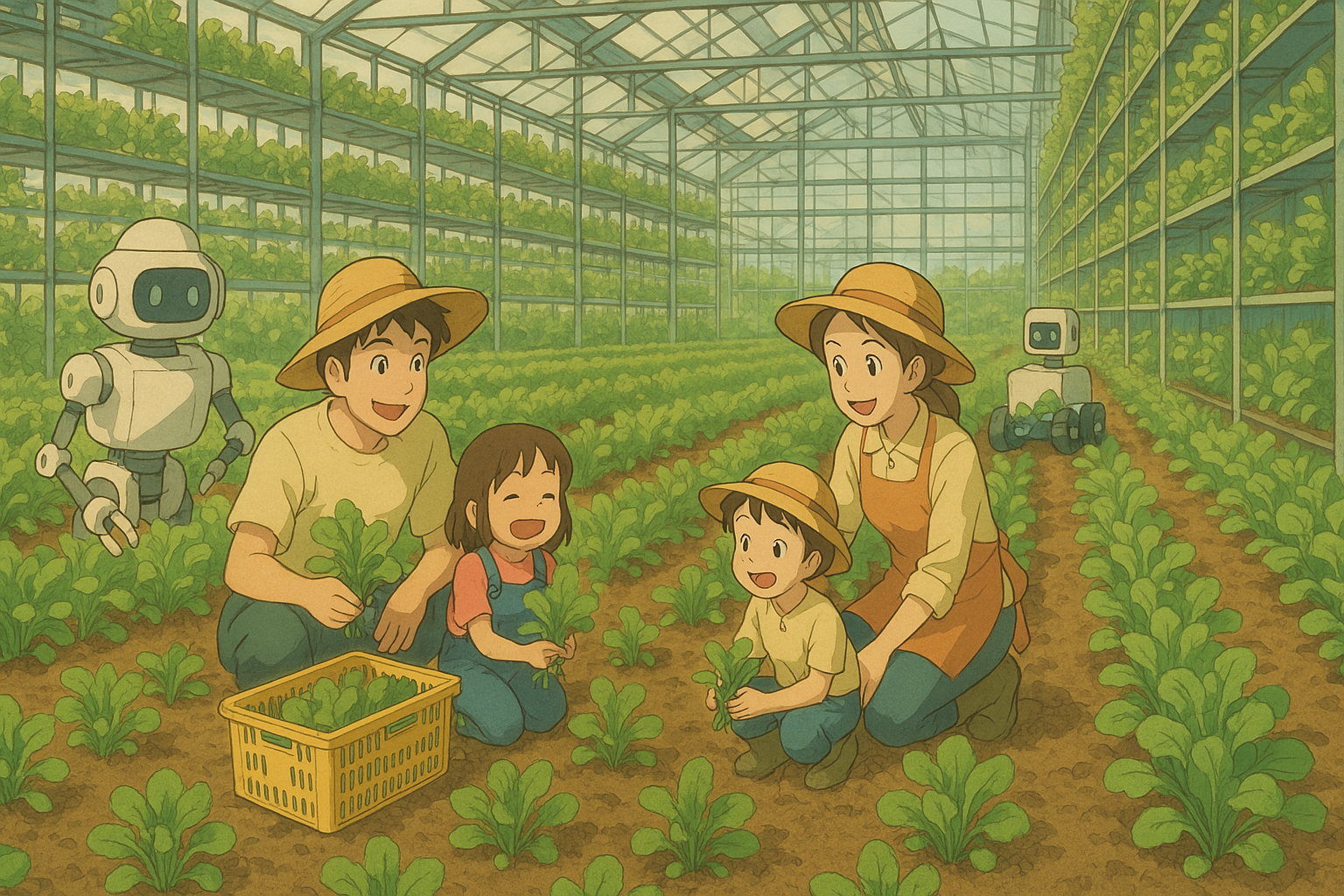
Imagine that, for example, when the energy produced by your own, say solar panels, water is collected and purified. Groceries you grow yourself. In the kitchen there is a huge machine like an agro-cabinet. It grows a variety of enhanced produce. Richer in vitamins and containing all the necessary nutrients, it grows quickly and it's all automated. Waste is recycled and fed back into the system. Clothing and miscellaneous household items can be manufactured too, with automation, or printing, it doesn't matter. Communication is peer-to-peer and in addition via satellites, from different competing operators. If push comes to shove, you can lock yourself in and live, if necessary, for years. It doesn't mean there's no global network, it doesn't mean everyone is isolated. It means that everyone can be independent of others and interact not by necessity but by preference. Countries of such a level will become so much out-of-reach again that they won't need and won't be afraid of savages. Then more and more countries and people will aspire to become like that and they will not need to be convinced, it will be obvious to the vast majority.

Self-sufficiency doesn't have to mean isolation or protectionism - it can coexist with global trade and competition. The key difference is that countries and communities would engage in global markets from a position of strength and choice rather than necessity or vulnerability.

The role of AI in this future is particularly interesting - it could optimize these systems, making small-scale production more efficient and competitive with large industrial operations. This technological convergence might enable even smaller communities to achieve levels of productivity that previously required massive economies of scale. What this creates is resilience without isolation - participating in global trade for variety, efficiency, and mutual benefit while maintaining the ability to withstand supply chain disruptions or external pressures.

New Stories for Hard Times

Posted on 2024-01-28 by Dmitri Zdorov

New stories for hard times

In a world without dragons to slay, are we destined to just fight windmills?

Humans, as well as all other species, were forged in a fierce battle for existence and survival. Our brain is a machine for solving problems, overcoming difficulties. We spend our whole lives solving problems. And if everything around us is arranged quite well for us and there are few natural difficulties, we will be solving invented ones. It will take no less energy, but it will be of little use.

However, we can, through the power of collective stories, create problems that are difficult and then solve them in the right way. It will make life better. Perhaps not now, but in the future. Not for us personally, but for humanity or even other species too. The right story will help us rejoice in such endeavors for the future now. It turns out our contemporary times lacks big ideals, something to strive for that doesn't feel like everything is fine, but not for the sake of contrived pseudo battles.

Again and again I come back that Don Quixote is a very important book. There's a desire to defeat monsters that translates into fighting windmills and fouling everything you touch. The modern world has become so filled with new stories, books, movies, etc. that important books that reveal deep philosophical dilemmas have been drowned in them. The big cults that eventually overwhelmed the earth in blood and wars were just so contagious because they showed this vector - the construction of a bright future.

But then maybe I'm wrong. Maybe we shouldn't look to that kind of story. Or should we, but more carefully? Or is our whole world now a disembodiment of such a new history? Or is it a struggle for immobility that could become one? Achieving world prosperity with UBI? Or will such global prosperity only make things worse? Or is it necessary to have different phases in life - easy/difficult?

Or am I being silly again?

Dreams Lead, Perseverance Fosters Conquest

Posted on 2024-01-27 by Dmitri Zdorov

DLPFC

We have an area in the brain that helps with a whole bunch of different cognitive tasks, like complex planning, emotion regulation, working memory processing, logic in decision making, etc.

And it only develops when we do things we don't want to do, the more we don't want to do them the better it develops.

You could say it's a muscle of willpower and discipline. But the correct name is Dorsolateral Prefrontal Cortex (DLPFC). Ironically, these things that we don't want to do are not necessarily useful or necessary for us, just the very fact of overpowering is what pushes the development of the area. It's a pity, of course, that you can't struggle and develop it for a while and then use it for the rest of your life. As soon as we stop forcing ourselves, this area weakens and shrinks, rather quickly - not in terms of physical size, but in terms of activity and helping the rest of the brain.

Also, good sleep is important for it too.

Daily logos

I started writing a blog on this site in 1999. It was called Dimka Daily. These days many of my updates go to various social media platforms and to the /blog here at this site, called just Blog. I left Daily as archive for posterity.