Soft-limbo-ware
Software will not disappear, but AI will cheapen clones, explode personal apps, and force business models and interfaces to change.
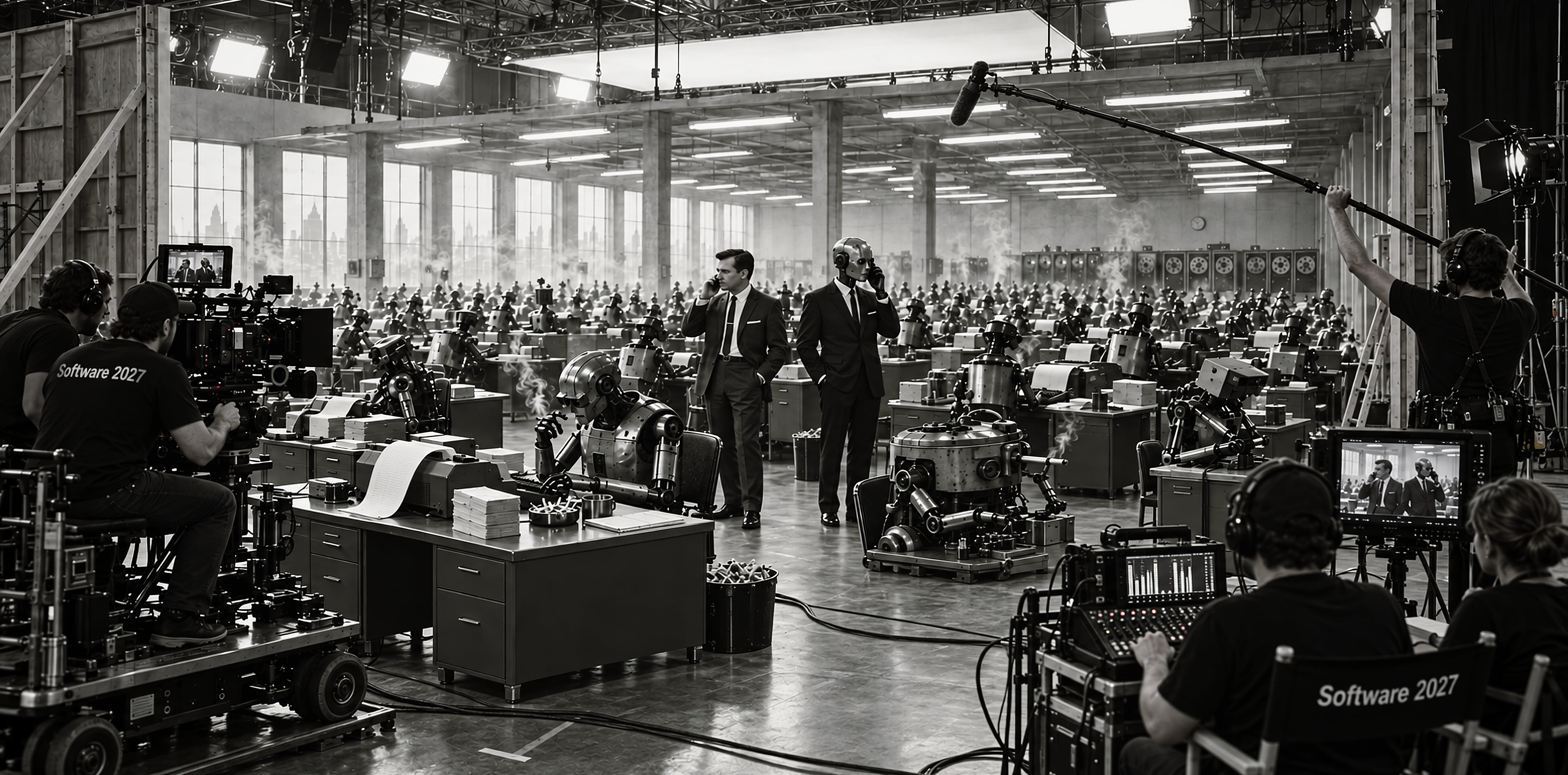
Here we go is software dead, or should we call it soft-limbo-ware?
Lately, widespread discussions have broken out over whether the software business will even survive, or if there will be any need for it at all. Will we just use AI to write whatever programs we need ourselves? It feels too early to say for sure, but let’s think it through.
First of all, even if AI can generate code and make final products, far from everyone knows how to write the right prompt for it, even if it's just to clone an existing app. And besides, not all the apps we might find useful actually exist yet for us to copy. Making a good, useful application used to be hard. You needed a large, competent team that understood both what needed to be built and how to build it. That team had to be paid a lot of money, which required a business model to bring that money in. Even in the case of free and open-source software, it's still a model. All of this was complicated, so relatively few complex, well-developed applications ever got made. As a result, they were either for very common problems, or for very narrow, high-stakes ones.
But now, for example, we’re seeing a literal flood of free and often even open-source apps cloning Adobe products like Photoshop. Soon, plenty of people will be able to spin up multiple copies of Photoshop and other Adobe tools. Perhaps not just anyone could do it with a single simple prompt. But people who know how to whip up those kinds of prompts may well be willing to spend the time and tokens chatting with large language models, walking them through how to implement the necessary features, building a clone of some popular app, and releasing it for free.
In the near term, I think that’s exactly what will happen with big products like Adobe Creative Suite or Microsoft Office, and with popular software in general that lots of people need and that used to be very expensive, like the aforementioned Photoshop. It will take vastly less effort than it used to. Still, not everyone will bother doing it, and not everyone will be able to. Meanwhile, people’s appetite for all sorts of different tools will grow significantly, and thus the sheer number of possible applications will explode. I am cranking out applications for my own needs all the time now, mostly because what I needed did not exist. For example, I made Podcast Track Cleaner, which does exactly what I want and how I want it. Nothing like that is on the market, but now I have it, I use it, and it's awesome.
I thought of an analogy for this. Imagine a rare, unusual dish that was only served in a few high-end restaurants, and almost no one knew the exact recipe. Now there’s no special secret to it, so supposedly anyone can go and make it. Well, for starters, not everyone is a chef or even knows how to cook. Even with the recipe in hand, a person might just not want to cook it themselves. There are more recipes out there now than ever before, and yet most people still don’t want to cook. However, the range of what can be easily prepared will get much wider, and more people who actually enjoy cooking will do it. Small restaurants might find things noticeably easier. Consequently, more affordable alternatives to expensive restaurants will pop up. Dishes that used to be a rarity will be available at almost any spot, and in many cases for much less. But that doesn’t mean restaurants will disappear altogether, or that every single one of them will suddenly become dirt cheap.
Software as a whole will go through the exact same kind of massive shift without disappearing. What will change dramatically are the business models, namely how it’s all structured and how people actually use it. New types of aggregators will emerge to help people find all these new apps and figure out what a given piece of software is even for.
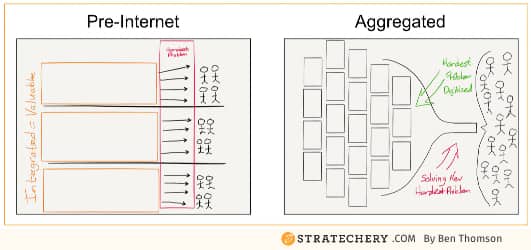
Maybe the restaurant analogy isn’t the best one. Possibly it’ll look more like what happened to legacy media and print publications when the internet arrived. Newspapers lost their local value and shrank in number, and news as a business, or even the whole phenomenon itself, transformed. Software might go that way. On top of that, a huge chunk of software only existed to handle routine tasks, the kinds of things AI can now do directly. And that’s a much bigger issue. If you can do it all with AI and no longer need the tools you used to buy, there’s no point in building those tools anymore. Which means all the people who built them are no longer needed, and neither is all the software they used. At the same time, we will need plenty of new things. This will reshape society beyond recognition. Huge changes are coming, though that doesn’t mean AI will be able to do literally everything anytime soon, not even build all the software, and especially not on its own.
Still, I don’t think the business of building commercial apps, programs, platforms, and so on will just die out in the next couple of years. Nevertheless, earth-shattering changes are on the way, whether we want them or not.
First, legacy business models are obviously going to start creaking like a submarine descending past its crush depth. Some companies will implode from the pressure, at some point almost instantaneously. Others will have it so rough they’ll end up laying off most of their staff. And for some, things will be fine or even better than ever. Just because AI can automate a lot doesn’t mean you can simply replace masses of people. It means that across everyone's daily tasks, a large percentage of their time can be handed over to agents. Existing companies have a hard time integrating this effectively, but new companies will emerge where the entire team’s workflow is built from day one around massive automation and the use of agents. They will do more, and they will do it faster. They will still need people, but the specializations, the roles, and most importantly the ratios of who makes up the team will transform completely. These new companies will eclipse the old ones.
Second, there will be a massive boom in personal apps and platforms. A lot of people are already starting to build their own things, and while maybe a small fraction of that can be monetized, most of it probably won’t be. Selling is hard, as it brings an extra layer of complexity and responsibility, making it infinitely easier to just build things for yourself and your friends. The main thing that will change here is that many people, and eventually almost anyone, will be able to whip up the exact apps they need for themselves. Not everyone, and not for everything, but a lot. And it will be easy. The analogy here is creating a social media account. To us today, that feels trivial, whereas to people from the pre-internet era, it would look monumental, almost like owning a personal publishing house with global printing and distribution. This will become commonplace, and creating something that used to take entire departments and months of work will feel akin to putting together a web page for a kid’s birthday party invitation.
Third, the very concept of the interface is going to change. Right now, apps and websites play a central role in so many ways, and they all share a familiar type of interface. Over the last few decades, that has predominantly been the GUI. On computers, that’s WIMP (Windows, Icons, Menus/Mice, Pointers), and later on smartphones, touch, i.e., Post-WIMP or a Natural User Interface (NUI), which is more convenient in some ways and less so in others. These familiar, graphically manipulated interfaces have prevailed for a long time, but they are going to give up that central role, and we might barely even use the interfaces we rely on today. The metaphor here is kind of like how kings or presidents use technology. They don’t need to install Photoshop, or Instagram, or anything more complicated. They just give requests to their subordinates: "do this, show me that." And so people show them, or get it done. They don’t care how it was made or what app is being used to display it. They just ask for it, and it gets done in whatever way makes the most sense for the task. Often by voice, often they’ll be shown something visual, and sometimes it’ll just be an action, like closing the blinds or ordering a pizza. Let’s call it Post-Post-WIMP, or a Request-Result-Contextual-Interface (RRCI).
None of this will happen overnight, but we are starting to see all three trends unfold right now. Software won't die, it’s just going to become something completely different.
Tags: aitechnologybusiness